
I was sitting in a local coffee shop last Tuesday, watching a city official drone on about “optimized urban ecosystems,” when I realized something: nobody actually cares about the algorithm. They care about whether the bus shows up on time and if the streetlights make them feel safe walking home at night. We’ve become so obsessed with the shiny, expensive promise of smart city technology that we’ve forgotten to ask if these digital layers actually make our lives easier, or if they’re just adding unnecessary friction to our daily routines. It feels like we’re being sold a high-tech fever dream while the fundamental basics of urban living are left to rot in the background.
I’m not here to sell you on the utopian vision of a fully automated metropolis. Instead, I want to pull back the curtain on what these advancements actually mean for the person living on the ground. Over the next few sections, I’ll be sharing my no-nonsense perspective on where this tech succeeds and where it’s just expensive noise. My goal is to help you distinguish between true progress and clever marketing, so you can decide for yourself if these changes are actually worth the trade-off in privacy and simplicity.
Table of Contents
Digital Twin Technology in Cities Progress or Virtual Prison
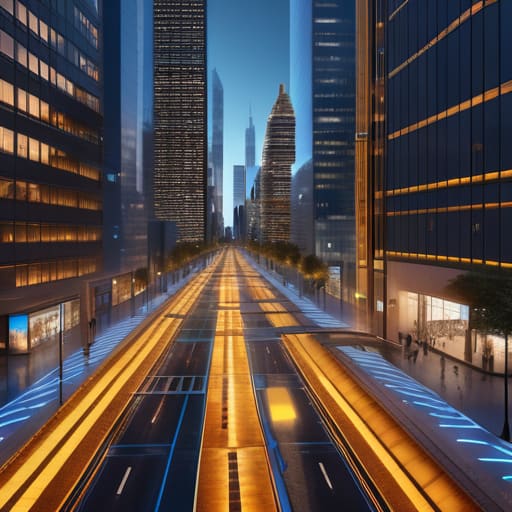
The concept of digital twin technology in cities sounds like something straight out of a high-budget sci-fi flick—a perfect, living replica of our streets, buildings, and transit systems existing entirely in a cloud. On paper, the efficiency is seductive. Proponents argue that by running simulations on these virtual models, we can perfect smart urban mobility solutions or predict how a new skyscraper might alter wind patterns before a single brick is laid. It promises a level of precision that our messy, physical reality rarely affords.
But as someone who spent years watching corporate metrics replace actual human intuition, I can’t help but feel a sense of unease. When we reduce a vibrant, unpredictable neighborhood to a series of data points in a simulation, we risk losing the “soul” of the city. If urban planners start making decisions based solely on what the digital model dictates, we might inadvertently optimize for efficiency while sacrificing the very spontaneity that makes city life worth living. Are we building cities for people, or are we just refining a massive, high-resolution simulation?
Real Time Data Analytics for Municipalities Insight or Intrusion

The promise of real-time data analytics for municipalities sounds incredible on a pitch deck. The idea is simple: sensors track traffic, waste levels, and energy usage, allowing city officials to respond to problems before they even manifest. We’re told this is the backbone of sustainable smart city frameworks, a way to trim the fat of urban inefficiency. On paper, it’s a dream of seamless living. But as someone who spent years in HR watching how much data can be used to micro-manage human behavior, I can’t help but wonder where the line is drawn.
When we deploy edge computing for urban management to process data instantly at the street level, we aren’t just optimizing traffic lights; we are creating a continuous, invisible audit of public movement. It’s one thing to use data to improve smart urban mobility solutions so you aren’t stuck in a gridlock on your way to a client meeting. It’s quite another when that same data becomes a permanent digital footprint of every citizen’s daily routine. We have to decide if we want cities that are merely “efficient” or cities that actually respect our right to move through the world without being a data point in a municipal dashboard.
How to Stay Human in a High-Tech Urban Grid
- Demand transparency over “black box” algorithms. If a city uses an automated system to manage traffic or public safety, we shouldn’t have to take their word for it that it’s fair; we need to see the logic behind the code.
- Prioritize analog backups for essential services. A city that relies 100% on a digital network is a city that can be paralyzed by a single software glitch or a bad patch. We need to keep the physical gears turning.
- Protect the “right to be invisible.” Not every movement through a public square needs to be a data point captured by a sensor. We must fight for zones where citizens can simply exist without being quantified.
- Focus on “low-tech” wins first. Before we invest millions in facial recognition, let’s see if we can use smart tech to actually fix the broken bus schedules or the leaking water mains that affect our daily lives.
- Advocate for community-led data ownership. The data generated by our lives shouldn’t just be a commodity for tech vendors; it should be a public utility managed by the people who actually live in the neighborhood.
The Human Bottom Line
We have to stop measuring urban “progress” solely by data points and start measuring it by how much breathing room it gives the people living there.
Efficiency shouldn’t be a euphemism for surveillance; if a technology optimizes a commute but erodes our sense of privacy, we’ve made a bad trade.
The goal of a smart city should be to support the messy, unpredictable reality of human life, not to force us into a perfectly predictable digital mold.
The Human Cost of Efficiency
“We keep talking about ‘optimizing’ our urban environments as if a city were just a piece of software to be debugged, but we forget that a city’s true pulse isn’t found in a stream of real-time data—it’s found in the unscripted, messy, and beautifully inefficient ways people actually live together.”
Yvette Marchetti
Finding the Human Pulse in a Wired World
We’ve looked at the heavy hitters—the digital twins that mirror our streets and the constant stream of real-time data that keeps municipalities humming. While the promise of efficiency is seductive, we can’t ignore the growing shadow of surveillance and the loss of urban spontaneity. The goal of a smart city shouldn’t just be to optimize traffic patterns or reduce energy waste through algorithmic precision; it should be to serve the people living within those grids. If we prioritize data points over human dignity, we aren’t building smarter cities—we are simply building more efficient machines that happen to have residents.
As we move forward, I hope we choose to be the architects of our own evolution rather than passive passengers in a tech-driven rollout. We need to demand transparency and ensure that every sensor installed and every dataset collected actually contributes to a more livable, equitable community. Technology is a tool, not a destiny. Let’s make sure we use it to clear the path for more human connection and freedom, rather than letting it build a digital wall between us and the world we actually inhabit. Real progress isn’t measured in gigabytes, but in how much more room we have to breathe.
Frequently Asked Questions
If our city's infrastructure is being managed by algorithms, who is actually held accountable when the system glitches and causes real-world chaos?
That’s the million-dollar question, isn’t it? When a human makes a mistake, there’s a paper trail and a face to hold accountable. But when an algorithm mismanages traffic flow or misallocates emergency resources, we enter this murky “accountability gap.” We tend to blame “the system,” which is just a convenient way of dodging responsibility. Until we demand clear legal frameworks that pin these glitches back to human decision-makers, we’re just trading oversight for efficiency.
How do we ensure these "smart" upgrades don't just become expensive ways to further marginalize neighborhoods that are already struggling with the digital divide?
This is where the sociology background kicks in, and honestly, it’s where my skepticism turns into real concern. If we only deploy high-tech sensors in affluent, high-traffic districts, we aren’t “optimizing” a city; we’re digitizing inequality. To avoid this, smart city initiatives must prioritize universal connectivity as a foundational utility, not a luxury. We need community-led design—asking the people in underserved neighborhoods what they actually need, rather than assuming a data-driven algorithm knows best.
At what point does the convenience of a streamlined city stop being a benefit and start becoming a constant, unavoidable surveillance state?
It stops being a benefit the moment you lose the ability to be anonymous in public. Convenience is a trade-off, but when “streamlining” means every movement is logged, categorized, and stored, you’ve crossed the line. We aren’t citizens anymore; we’re just data points in a municipal optimization script. If you can’t walk to a coffee shop without triggering a dozen sensors, that isn’t a smart city—it’s a digital cage.
