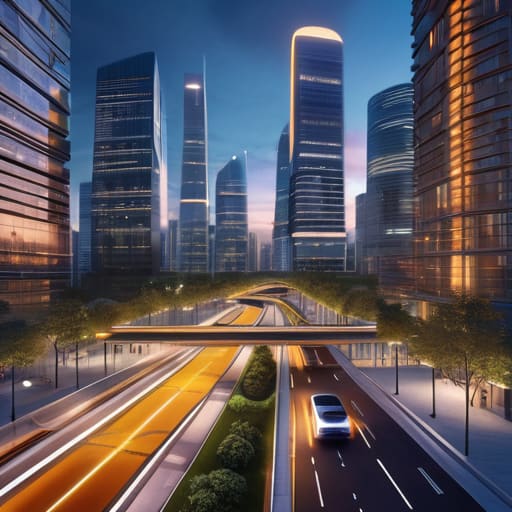
I was sitting in a local coffee shop last Tuesday, watching a city official give a presentation on how “integrated data ecosystems” would revolutionize our commute, when I realized something was missing. He spoke about smart cities technology as if it were a magical, self-correcting deity, but he never once mentioned the actual human beings living in these streets. We’re being sold this vision of seamless, automated urban living, yet all I could see were sensors being bolted onto lamp posts like digital parasites, designed more to harvest data than to actually help a person catch a bus on time.
I’m not here to tell you that every new sensor is a revolution or that we should just hand the keys to the algorithm. My goal is to cut through the glossy brochures and look at how these systems actually impact our daily autonomy. I promise to give you a grounded, no-nonsense look at what these advancements mean for our privacy and our peace of mind. We’re going to figure out which parts of this tech actually grant us more freedom, and which parts are just adding more noise to an already crowded world.
Table of Contents
The Data Trap Beyond Smart City Data Analytics
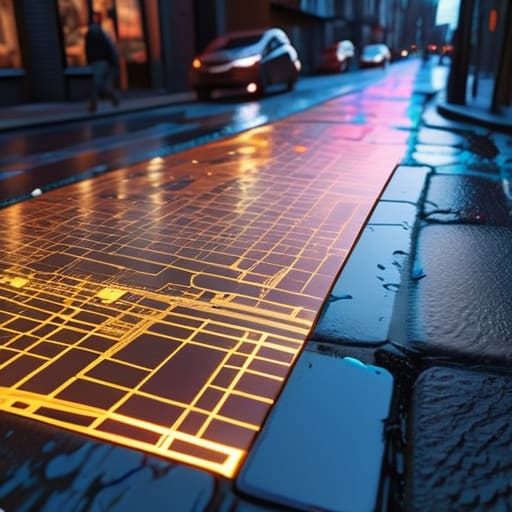
The real danger isn’t the tech itself, but the assumption that more data automatically equals better living. We’re being sold this dream where smart city data analytics can solve every urban headache, from waste management to energy consumption. But as someone who spent years in HR watching “optimized” systems fail the people they were meant to serve, I see a pattern. We’re building these massive digital twins of our neighborhoods, creating a perfect mathematical model of a city that doesn’t actually account for the messy, unpredictable nature of human behavior.
When we lean too heavily on automated traffic management systems or constant sensor feedback, we risk turning our streets into something that feels more like a laboratory than a community. It’s easy to get caught up in the efficiency of IoT in urban management, but efficiency is a cold metric. If we prioritize the flow of data over the quality of life, we aren’t actually building sustainable urban development; we’re just building a more efficient way to monitor ourselves. We need to ask: who owns this data, and more importantly, what happens when the algorithm decides your neighborhood’s “efficiency” doesn’t include your local community garden?
Digital Twins or Digital Prisons Reclaiming Urban Agency
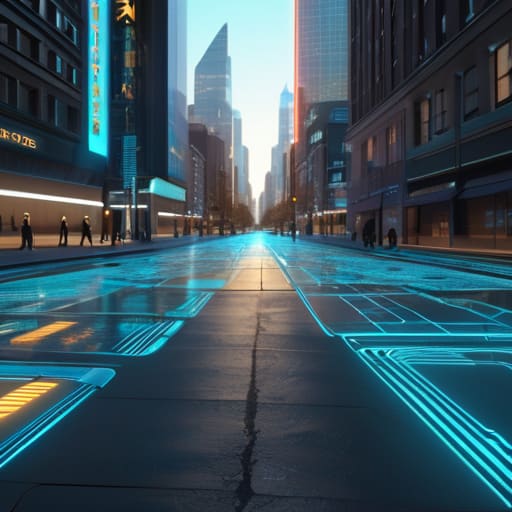
The promise of digital twin technology for cities sounds like a dream on paper—a perfect, virtual mirror where planners can test every variable before a single brick is laid. It’s marketed as the ultimate tool for sustainable urban development, a way to simulate everything from energy consumption to pedestrian flow. But as someone who spent years watching corporate systems prioritize efficiency over people, I can’t help but wonder: who is this mirror actually serving? When we create a high-fidelity digital replica of our streets, we aren’t just simulating traffic; we are creating a blueprint for total predictability.
The danger lies in the shift from optimization to control. If we rely too heavily on these models to dictate how our cities breathe, we risk designing out the very spontaneity that makes urban life worth living. We might solve for congestion with automated traffic management systems, but in doing so, we might accidentally build a city that feels more like a pre-programmed algorithm than a living, breathing community. We have to ensure these tools remain aids for human decision-making, rather than becoming invisible architects that decide how we move, live, and interact without ever asking for our input.
How to Keep Your City Human in a Sea of Sensors
- Demand transparency over “black box” algorithms. If a city is using an AI to manage traffic flow or emergency responses, we shouldn’t just be told it works; we should be able to see the logic behind it so it doesn’t become a tool for baked-in bias.
- Prioritize “analog” backups for critical infrastructure. As much as I love efficiency, a city that can’t function if the cloud goes down or the grid glitches isn’t a smart city—it’s a fragile one. We need systems that respect the reality of tech failure.
- Protect the right to be uncounted. Smart city tech shouldn’t be a prerequisite for existing in public space. We need to ensure that walking down a street doesn’t automatically turn into a data point in a marketing database.
- Focus on “quiet” tech that solves real problems. Instead of flashy, high-noise gadgets that just collect data for the sake of it, we should be pushing for tech that actually reduces friction—like smarter waste management or better public transit timing—without making our lives feel like a constant surveillance loop.
- Keep the human in the loop for urban planning. Data can tell us where people walk, but it can’t tell us why a park feels welcoming or why a certain street corner feels unsafe. Digital insights should supplement community feedback, never replace the actual voices of the people living there.
The Human Bottom Line
We have to stop treating urban efficiency as the ultimate goal; a city that runs perfectly on paper but leaves its citizens feeling watched and disconnected is a failed experiment.
Data shouldn’t be something collected from us without our meaningful consent; it needs to be a tool we use to shape our own neighborhoods, not a way for corporations to map our every move.
True progress in smart city tech isn’t measured by how much data we can squeeze out of a street corner, but by whether that technology actually gives us more time, more agency, and more room to breathe.
The Efficiency Illusion
“We’re being sold a dream of frictionless living, but we need to ask ourselves: if every movement in our city is optimized by an algorithm, are we actually living in a community, or are we just moving through a highly efficient simulation?”
Yvette Marchetti
The Human Blueprint

At the end of the day, we can’t let the allure of “optimization” blind us to what’s actually happening on our street corners. We’ve spent this article dissecting how data analytics can become a trap and how digital twins risk turning our vibrant, messy neighborhoods into sterile, monitored simulations. If we aren’t careful, we’ll trade our privacy and our spontaneity for a version of efficiency that serves a server farm rather than a person. We need to stop asking if a technology can be integrated into our urban fabric and start asking if it should be. The goal shouldn’t be a city that runs like a perfectly calibrated machine, but one that prioritizes human agency over algorithmic convenience.
Moving forward, I hope we choose to view smart city tech as a tool for empowerment, not a mechanism for surveillance. Let’s advocate for systems that actually give us more breathing room—tech that manages traffic so we spend less time idling in fumes, or sensors that optimize energy without stripping us of our autonomy. We have to remain the architects of our own lives, ensuring that as our cities get “smarter,” they also become more deeply, unapologetically human. Real progress isn’t found in a dashboard of real-time metrics; it’s found in the freedom to live, move, and exist without being treated like a mere data point.
Frequently Asked Questions
If we’re handing over urban management to algorithms, how do we ensure that a software glitch doesn't leave an entire neighborhood without basic services?
That’s the million-dollar question, isn’t it? We’re so obsessed with the “smart” part that we forget about the “fail-safe” part. If we treat urban management like a closed-loop software system, we’re asking for disaster. We need hard-coded manual overrides and human oversight at every level. Algorithms should suggest, but they shouldn’t dictate. We need to build these systems with “graceful degradation” in mind—ensuring that when the tech inevitably glitches, the lights stay on and the water keeps running.
Who actually owns the data being collected on our daily commutes—the tech companies selling the sensors, or the citizens living under them?
Right now? It’s a legal gray area that leans heavily toward the companies. While we “generate” the data by simply existing in public spaces, the ownership usually falls to the entities that own the hardware or the proprietary algorithms processing it. We’re essentially providing the raw material for free, while tech firms package it into valuable insights. Unless we demand new frameworks for data sovereignty, we’re just unpaid contributors to someone else’s bottom line.
How do we prevent "smart" infrastructure from becoming a tool that further marginalizes communities that can't afford the latest digital upgrades?
We have to stop treating “smart” as a synonym for “expensive.” If a city’s progress relies on everyone owning the latest smartphone or high-speed fiber, we aren’t building a community; we’re building a gated digital neighborhood. Real innovation should focus on low-tech integration—like making public transit more intuitive or improving street lighting—rather than just layering high-cost sensors over existing problems. We need to prioritize accessibility over novelty, or we’re just automating inequality.
