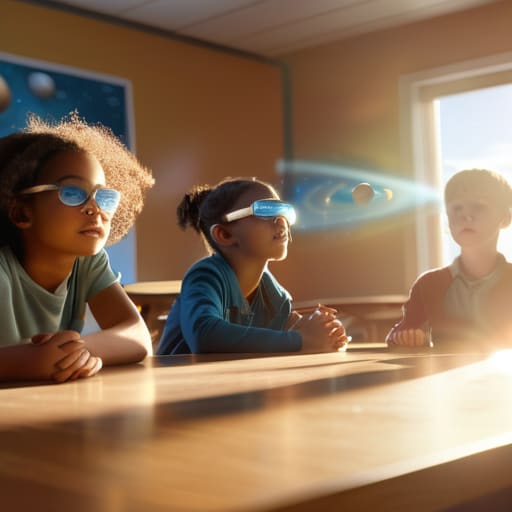
I was sitting in a coffee shop last week, watching a group of tech evangelists pitch a new “immersive learning platform” to a local school board. They were throwing around terms like seamless integration and unprecedented engagement, but all I could see was a massive, overpriced digital layer being slapped onto a classroom to solve problems that don’t actually exist. We’ve been told for years that augmented reality in education is the silver bullet that will finally make kids love biology or history, but I’m tired of seeing expensive gadgets treated as a substitute for actual, meaningful teaching. It feels less like progress and more like we’re just trying to distract students with shiny, digital bells and whistles.
I’m not here to tell you that every new piece of hardware is a revolution. Instead, I want to look past the marketing gloss and ask what this tech actually does for the human beings in the room. Over the next few minutes, I’ll share my no-nonsense take on where this technology actually adds value and where it’s just expensive noise. We’re going to figure out if these tools truly empower students to learn, or if they’re just creating more friction in an already complicated system.
Table of Contents
- Evaluating Ar Applications for K 12 Without Losing Soul
- Beyond Student Engagement Through Ar Finding Real Meaning
- Five Ways to Keep the Human Element in an AR-Driven Classroom
- The Bottom Line: Keeping the Human Element Front and Center
- The Human Cost of Digital Spectacle
- The Human Element in a Digital Classroom
- Frequently Asked Questions
Evaluating Ar Applications for K 12 Without Losing Soul

When we talk about implementing AR applications for K-12, the temptation is to go all-in on the flashiest interface. We see these sleek demos of students interacting with 3D models of DNA strands or historical monuments, and it’s easy to mistake a high engagement score for actual learning. But as someone who spent years watching corporate training modules fail because they were more “game” than “growth,” I’ve learned to be wary. We have to ask: is this tool actually deepening their understanding, or is it just providing a high-tech distraction?
The real challenge lies in developing a sound augmented reality pedagogy that prioritizes critical thinking over mere spectacle. It isn’t enough to just drop mixed reality in classrooms and hope for the best. If we aren’t careful, we risk creating virtual learning environments that feel incredibly immersive but leave students feeling strangely isolated from their peers and their physical surroundings. We need to ensure these tools act as a bridge to the real world, not a replacement for the messy, essential human connections that happen when kids solve problems together in a physical space.
Beyond Student Engagement Through Ar Finding Real Meaning
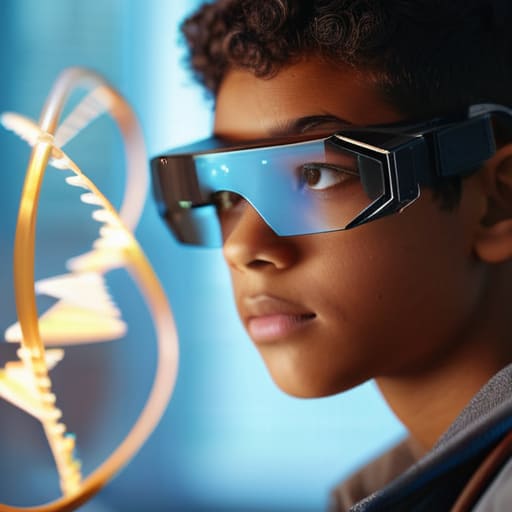
We have to stop treating student engagement through AR as the finish line. In my years in HR, I saw countless “innovative” tools rolled out to boost morale that ultimately just served as expensive distractions. The same risk exists here. If we use these tools merely to keep kids’ eyes glued to a device, we aren’t teaching; we’re just providing high-tech entertainment. The goal shouldn’t be a flashy visual; it should be about deepening the cognitive connection to the subject matter.
True value lies in how these virtual learning environments facilitate actual inquiry. Instead of just overlaying a 3D model of a cell on a desk, we should be asking how that model allows a student to grasp concepts that were previously too abstract to touch. We need to move toward an augmented reality pedagogy that prioritizes critical thinking over mere spectacle. If the tech doesn’t give a student the agency to ask “why” or “how” more effectively than a textbook could, then it’s just noise. We aren’t looking for digital magic tricks; we’re looking for tools that actually expand a child’s capacity to understand the world.
Five Ways to Keep the Human Element in an AR-Driven Classroom
- Prioritize active inquiry over passive consumption. If a student is just staring through a headset at a floating model without being asked to analyze or manipulate it, they aren’t learning—they’re just watching a high-tech movie.
- Use AR to bridge, not replace, physical reality. The best use of this tech is when it helps a student understand the physical world better, like visualizing magnetic fields in a lab, rather than pulling them into a digital vacuum.
- Watch out for the “novelty trap.” Just because a lesson looks impressive on a screen doesn’t mean it’s pedagogically sound. If the tech is doing more work than the student’s brain, it’s a distraction, not a tool.
- Ensure accessibility doesn’t become a digital divide. We have to be pragmatic about the hardware; if an AR curriculum requires expensive, high-end devices that only certain districts can afford, we’re just widening the gap between the haves and the have-nots.
- Keep the teacher in the driver’s seat. AR should be a supplement to the instructor’s expertise, not a way to automate the teaching process. Technology should empower the educator to facilitate deeper discussions, not replace the human connection that drives true mentorship.
The Bottom Line: Keeping the Human Element Front and Center
We have to stop treating AR as a magic fix for engagement; if the tech doesn’t serve a specific, meaningful learning goal, it’s just expensive digital noise that distracts from actual comprehension.
True educational progress shouldn’t be measured by how “high-tech” a classroom feels, but by whether these tools actually give students more agency and deeper connections to the subject matter.
As we integrate these layers of digital reality, our priority must remain on protecting the social, tactile, and human experiences that form the bedrock of a real education.
The Human Cost of Digital Spectacle
“We have to stop asking if AR can make a lesson more ‘engaging’ and start asking if it’s actually helping a student understand the world, or if we’re just trading deep, focused thinking for a high-tech dopamine hit.”
Yvette Marchetti
The Human Element in a Digital Classroom

At the end of the day, augmented reality isn’t a magic wand that will suddenly make every student a genius. We’ve looked at how these tools can either deepen a child’s understanding of a complex biological cell or simply serve as a flashy, expensive distraction that pulls them away from actual critical thinking. If we use AR to replace the tactile, messy, and essential parts of learning—like the way a student feels when they finally grasp a concept through conversation or hands-on experimentation—we’ve failed. The goal shouldn’t be to create a high-tech spectacle, but to ensure that technology serves as a bridge to deeper comprehension rather than a barrier to it.
As we move forward, I hope we stop asking how much tech we can cram into a classroom and start asking how much tech actually serves the student. We need to remain the architects of our educational systems, not just the passive consumers of whatever the latest Silicon Valley trend happens to be. Let’s use these digital tools to expand the horizons of what our children can imagine, while always keeping their humanity and connection to the real world at the very center of the lesson plan. Technology should give us more room to be human, not less.
Frequently Asked Questions
How do we prevent AR from becoming just another expensive distraction that pulls kids away from actual critical thinking?
We prevent it by treating AR as a tool, not a destination. If a student is just wearing a headset to watch a 3D animation of a cell, they aren’t learning; they’re spectating. To keep critical thinking alive, we have to design lessons where the AR provides the data, but the student provides the analysis. The tech should spark the question, but the heavy lifting—the actual reasoning—must remain stubbornly, beautifully human.
Is the cost of implementing this tech going to widen the gap between well-funded schools and those already struggling to keep up?
Let’s be honest: if we aren’t careful, we’re just digitizing inequality. We’ve seen this pattern before with laptops and high-speed internet; the “haves” get cutting-edge tools that spark innovation, while the “have-nots” get hand-me-down hardware that barely runs. If AR becomes a prerequisite for a modern education, we aren’t just teaching kids; we’re widening a canyon. We can’t let progress become a luxury item that leaves half our students in the rearview mirror.
What happens to the social fabric of a classroom when students are all looking through individual lenses instead of at each other?
That’s the question that keeps me up at night. When we trade eye contact for digital overlays, we risk turning a shared social experience into a collection of isolated, private bubbles. Learning isn’t just about absorbing data; it’s about the friction of debate and the nuance of a classmate’s expression. If every student is staring through their own private lens, we might accidentally trade genuine human connection for a series of high-tech solo performances.
