Last week, I sat in my kitchen, watching my father struggle to navigate a “smart” pill dispenser that looked more like a piece of sci-fi prop than a medical tool. It was flashing red, beeping incessantly, and ultimately, it just left him feeling more confused and less in control. This is the problem with the current obsession with tech for aging populations: we seem to think that if we just add enough sensors, screens, and notifications, we’ve solved the problem of aging. But most of these gadgets aren’t designed for dignity; they are designed for surveillance. We are flooding the market with complex hardware that treats seniors like data points to be monitored rather than people who deserve autonomy.
I’m not here to sell you on the latest shiny gadget or the next big Silicon Valley hype cycle. Instead, I want to look at what actually works—the tools that bridge the gap between safety and independence without turning a home into a high-tech laboratory. I promise to share a no-nonsense guide to the technology that actually serves a purpose, focusing on solutions that respect the user’s intelligence and preserve their sense of self.
Table of Contents
- Beyond Gadgets Prioritizing Digital Inclusion for Seniors
- Smart Home Devices for Elderly Safety Without Losing Dignity
- Practical Steps for Integrating Tech Without the Friction
- The Bottom Line: Keeping the Human in the Loop
- The Human Cost of Efficiency
- The Human Bottom Line
- Frequently Asked Questions
Beyond Gadgets Prioritizing Digital Inclusion for Seniors
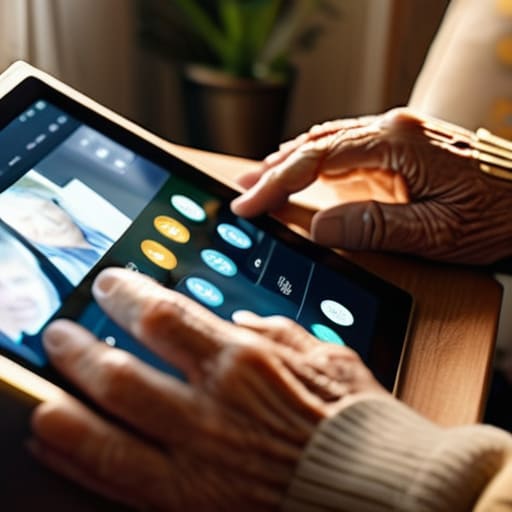
The problem with most tech development is that it’s designed by twenty-somethings in Silicon Valley for people who have never had to squint at a screen or deal with arthritic joints. We see a flood of new gerontechnology innovations hitting the market, but many of them feel like they were built for a different species. If we want true digital inclusion for seniors, we have to move past the “one-size-fits-all” mentality. It isn’t enough to just hand someone a tablet and hope for the best; we need to design interfaces that respect their existing cognitive patterns and physical realities.
Real progress means ensuring that tools like smart home devices for elderly safety don’t feel like surveillance equipment. There is a fine line between providing security and stripping away a person’s sense of privacy and agency. We should be focusing on tech that integrates seamlessly into their lives—tools that feel like helpful companions rather than intrusive monitors. If the technology requires a PhD just to set up, we haven’t actually solved a problem; we’ve just created a new barrier to independence.
Smart Home Devices for Elderly Safety Without Losing Dignity

We’ve all seen the commercials: a sleek, futuristic device that promises to monitor every heartbeat and footstep. But there is a fine line between safety and surveillance. When we talk about smart home devices for elderly safety, the goal shouldn’t be to turn a living room into a high-security prison. If a person feels like they are being watched by a dozen unblinking digital eyes, they stop feeling like they are at home. They start feeling like a patient in a facility, even if they’re in their own living room.
The real magic happens when we move toward subtle, non-intrusive solutions. Instead of bulky, stigmatizing hardware, I’m more interested in how gerontechnology innovations are making things disappear into the background. Think of ambient sensors that detect a fall without requiring a person to wear a clunky pendant, or lighting systems that guide someone through a dark hallway at night. We need to prioritize tools that provide a safety net while preserving that essential sense of privacy and autonomy. It’s about creating a quiet layer of protection that stays out of the way until it’s actually needed.
Practical Steps for Integrating Tech Without the Friction
- Prioritize intuitive interfaces over feature density. If a device requires a twenty-minute tutorial just to make a video call, it’s not a tool; it’s a chore. Look for hardware that prioritizes large touch targets and clear, high-contrast visuals.
- Focus on “invisible” tech that assists rather than monitors. The best tools are the ones that run in the background—like automated medication dispensers or smart lighting that adjusts for fall prevention—without making the user feel like they’re under constant surveillance.
- Build a “digital safety net” before the crisis hits. Don’t wait for a fall or a missed call to set up remote access or emergency protocols. Set up shared digital calendars and simplified communication loops while everyone is calm and tech-literate.
- Demand interoperability, not walled gardens. It’s incredibly frustrating to have a smart home where the lights won’t talk to the voice assistant. Stick to ecosystems that play well together so that troubleshooting doesn’t become a full-time job for the user or their family.
- Maintain the human connection as the primary goal. Technology should be the bridge, not the destination. Use a tablet to see a grandchild’s face, but don’t let the tablet replace the actual, physical visits that provide true emotional stability.
The Bottom Line: Keeping the Human in the Loop
We have to stop treating tech as a substitute for care; it should be a tool that facilitates connection, not a way to outsource our presence to a sensor or a screen.
True innovation for seniors isn’t about how many bells and whistles a device has, but how much it reduces the “cognitive load” and friction of daily life without making them feel like a patient.
Digital inclusion is a civil right, not a luxury—if we design systems that require a PhD to navigate, we aren’t progressing, we’re just building new walls.
The Human Cost of Efficiency
We have to stop designing tech for seniors as if they are problems to be managed or data points to be monitored; real innovation isn’t about building a digital cage of sensors, it’s about building bridges that let them stay connected to the world on their own terms.
Yvette Marchetti
The Human Bottom Line

At the end of the day, we have to stop looking at aging as a problem to be “solved” by a new piece of hardware. We’ve talked about the necessity of digital inclusion, the importance of intuitive design, and how smart home tech can provide a safety net without turning a living room into a high-tech surveillance ward. But none of these tools matter if they are implemented in a vacuum. If we prioritize the efficiency of the system over the comfort of the person using it, we’ve failed. Technology in this space shouldn’t be about monitoring decline; it should be about fortifying independence and bridging the gap between isolation and connection.
As I sit here at my desk, looking at my paper planner and my cluttered digital desktop, I’m reminded that progress isn’t always about the newest shiny object. It’s about how those objects serve our core needs for dignity and agency. Let’s demand better from the developers and the companies building these tools. Let’s push for a future where technology acts as a quiet, supportive scaffolding for our elders, rather than a loud, confusing barrier. If we get this right, we aren’t just making life easier for seniors; we are building a more compassionate, human-centric world for all of us as we age.
Frequently Asked Questions
How do we ensure these devices don't become a way for families to "outsource" their presence and stop visiting in person?
We have to be careful not to let a motion sensor or a video doorbell become a substitute for a Sunday afternoon visit. It’s easy to check a dashboard and think, “Okay, Mom’s fine, she moved in the kitchen today,” and then close the app. But data isn’t connection. We must treat these tools as bridges to facilitate more meaningful contact, not as digital proxies that allow us to check a box and stay home.
What happens to privacy and data security when we start installing sensors and cameras in an elderly person's most private spaces?
This is where the “convenience” argument gets messy. When we turn a living room into a data-collection hub, we’re essentially trading privacy for peace of mind. It’s a heavy price. We have to ask: who actually owns that footage? Is it the family, or a corporation selling “behavioral insights”? If we aren’t careful, we’ll end up monitoring our elders into a state of constant surveillance, stripping away the very autonomy we’re trying to protect.
How can we bridge the gap for seniors who didn't grow up with a smartphone in their hand and find modern interfaces fundamentally intimidating?
We have to stop designing for the twenty-something who grew up swiping before they could talk. If an interface feels like a barrier, it’s a design failure, not a user failure. We need to lean into tactile feedback, voice commands that actually understand natural speech, and interfaces that prioritize familiarity over “sleekness.” It’s about meeting people where they are—using high-contrast visuals and intuitive logic—rather than forcing them to learn a new language just to call their grandkids.
