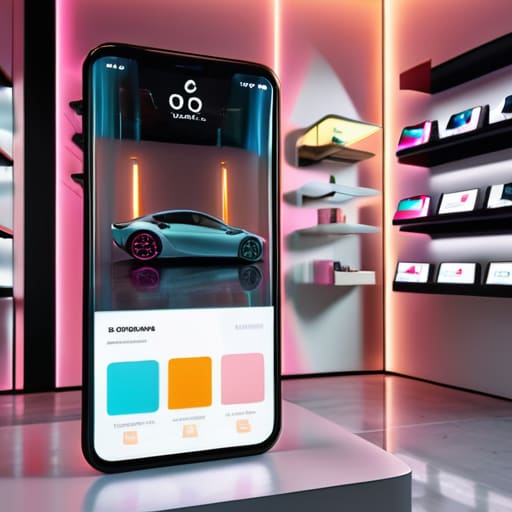
I was in a boutique last week, trying to find a simple lamp to match a mid-century sideboard I’m restoring, when I saw a group of teenagers huddled around a kiosk, frantically waving their phones around. They were testing out some new augmented reality retail feature that promised to “visualize” products in their homes. To them, it looked like magic; to me, it looked like a lot of digital squinting and unnecessary friction. We’ve reached a point where brands are so obsessed with the spectacle of tech that they’ve forgotten the basic goal of shopping: making a decision and feeling good about it.
I’m not here to tell you that this technology is a revolution, nor am I here to dismiss it as a gimmick. Instead, I want to peel back the marketing gloss and look at what augmented reality retail actually does to our sense of agency and ease. Over the next few sections, I’ll share my honest take on whether these tools actually solve real consumer problems or if they are just expensive digital noise designed to distract us from a lack of real substance.
Table of Contents
- Virtual Product Visualization Enhancing Choice or Creating Illusion
- Navigating the New Augmented Reality Customer Journey
- Practical Grounding: How to Use AR Without Losing the Human Connection
- The Bottom Line: Keeping the Human in the Loop
- The Human Cost of the Digital Layer
- The Human Bottom Line
- Frequently Asked Questions
Virtual Product Visualization Enhancing Choice or Creating Illusion

We’ve all been there: staring at a screen, trying to guess if that velvet armchair will actually fit in your living room or if it’s just going to look like a giant, misplaced blob. This is where virtual product visualization steps in, promising to bridge the gap between a digital thumbnail and reality. On paper, it’s a dream. Being able to drop a life-sized 3D model of a lamp onto your actual side table via your phone feels like magic. It’s supposed to reduce the “will it work?” anxiety that leads to so many returns.
But as someone who spends my weekends sanding down actual wood and measuring real dimensions, I can’t help but wonder where the line is between helpful utility and clever deception. There is a fine line between empowering a shopper and using spatial computing in e-commerce to mask the true texture or scale of an item. If the tech makes a product look more vibrant or perfectly scaled than it truly is, we aren’t enhancing choice—we’re just perfecting the art of the digital illusion. We need to ensure these tools serve the truth, not just the sale.
Navigating the New Augmented Reality Customer Journey

When we talk about the augmented reality customer journey, we often focus on the “wow” factor of a single app feature. But as someone who spent years in HR watching how people actually adapt to new tools, I’ve learned that the magic isn’t in the novelty; it’s in the seamlessness. If a customer has to jump through three hoops just to see how a lamp looks in their living room, the technology has failed. We aren’t looking for more digital friction; we are looking for clarity.
The real shift happens when we move toward true spatial computing in e-commerce, where the digital and physical worlds stop fighting for attention and start working together. I’m interested in how this tech can actually reduce the “buyer’s remorse” that plagues online shopping. If a brand can use these tools to bridge the gap between a screen and a physical space, they aren’t just chasing a trend—they are actually respecting the customer’s time and decision-making process. It’s about making the transition from browsing to owning feel intuitive, not performative.
Practical Grounding: How to Use AR Without Losing the Human Connection
- Prioritize utility over spectacle. If an AR tool doesn’t solve a genuine problem—like helping a customer understand if a lamp actually fits their side table—it’s just digital clutter that gets in the way of a sale.
- Keep the friction low. There is nothing more frustrating than a “seamless” experience that requires a twenty-minute app download; if the tech creates more work for the customer, it’s a failure of design.
- Don’t let the digital mask hide the physical reality. Always provide clear, honest data alongside the visual overlay, because a high-def render is useless if it obscures the actual texture or scale of the product.
- Train your people, not just your software. Technology should empower your floor staff to be better consultants, not replace them; an AR headset shouldn’t be a barrier between a knowledgeable employee and a curious shopper.
- Maintain a “human-first” feedback loop. Regularly step away from the data metrics and actually talk to the people using these tools to see if they feel more empowered or just more overwhelmed by the noise.
The Bottom Line: Keeping the Human in the Loop
AR shouldn’t be a gimmick used to mask a poor shopping experience; it has to serve a practical purpose, like helping a customer feel confident about a purchase before they hit ‘buy.’
We need to guard against “digital clutter”—if a virtual overlay makes a physical store feel more chaotic rather than more intuitive, it’s a failure of design, not a breakthrough.
Real retail success in the tech age won’t come from who has the flashiest headset, but from who uses these tools to bridge the gap between digital convenience and the tactile reality of physical goods.
The Human Cost of the Digital Layer
“We have to ask ourselves: are these AR overlays actually helping us make better decisions, or are they just another layer of digital noise designed to bypass our intuition and nudge us toward a purchase we didn’t actually need?”
Yvette Marchetti
The Human Bottom Line
At the end of the day, augmented reality in retail isn’t a magic wand that fixes a broken shopping experience; it’s just another layer of complexity to manage. We’ve looked at how virtual visualization can either clarify a purchase or create a deceptive sense of certainty, and we’ve mapped out how the customer journey is shifting from physical touch to digital overlay. If these tools are used merely to drive up engagement metrics or mask a lack of real product quality, they will ultimately fail. The goal shouldn’t be to create a seamless digital facade, but to use technology to bridge the gap between curiosity and confidence. We have to ensure that these innovations serve the shopper, rather than just serving the algorithm.
As we move forward, I find myself returning to that same question I ask when I’m stripping old lacquer off a mid-century chair: does this addition actually improve the piece, or is it just hiding the flaws? The same applies to our digital lives. Let’s welcome the tools that offer us more clarity and more time, but let’s remain fiercely protective of the human connection that makes commerce meaningful. Real progress in retail won’t be measured by how many pixels we can cram into a smartphone screen, but by how much more intentional and empowered our customers feel when they finally make a choice.
Frequently Asked Questions
Does this tech actually solve the "return problem," or are we just trading physical returns for digital disappointment?
It’s a fair question, and honestly, I’m not sold yet. On paper, AR should slash return rates by letting us “try” things first. But there’s a massive gap between a digital render and reality. If a tool gives me a false sense of confidence, I’m not just returning a product; I’m feeling cheated by a pixelated lie. We aren’t solving the return problem; we’re just shifting the frustration from the fitting room to the doorstep.
How do we prevent these AR experiences from becoming just another layer of digital clutter that distracts us from the actual products?
We have to stop designing for “wow factor” and start designing for utility. If an AR tool doesn’t solve a specific friction point—like seeing if a sofa actually fits your living room—it’s just digital noise. To keep it from becoming clutter, brands need to prioritize invisible tech: tools that fade into the background when they aren’t needed and provide genuine clarity when they are. If it doesn’t add value, it’s just an expensive distraction.
For small, brick-and-mortar shops, is the cost of implementing this stuff actually worth the payoff, or is it just a playground for big-budget retailers?
Right now? It’s mostly a playground for the giants. For a small shop, the entry cost—both in cash and the mental energy to manage new tech—is steep. I see local owners getting lured by the hype, only to find themselves babysitting buggy software instead of helping customers. Unless a tool solves a specific, painful problem for your unique niche, don’t chase the shiny object. Stick to what keeps your doors open.
