
I was sitting in my favorite armchair last Sunday, surrounded by a stack of half-finished hardcovers that had begun to feel more like a to-do list than a collection of stories. My living room was cluttered, my eyes were straining under the lamp, and I felt that familiar, nagging guilt of a reader who has more books than actual time. We’re constantly told that the latest gadgets are designed to “disrupt” our lives, but most tech hype feels like it’s just adding more noise to an already loud world. I didn’t need a device that demanded my constant attention; I needed a way to reclaim my focus. That’s when I started looking past the marketing fluff to see if the actual e-reader benefits were worth the digital footprint.
I’m not here to sell you on a lifestyle of mindless scrolling or to convince you that paper is obsolete. Instead, I want to share a pragmatic look at how these devices can actually serve us, rather than the other way around. I’ll be breaking down how to use this technology to protect your quiet moments and manage your reading without letting a screen hijack your brain. This isn’t about the hype; it’s about intentionality.
Table of Contents
Choosing Calm Digital Reading vs Print Books

Choosing Calm: Digital reading vs print books
I spent my Sunday morning surrounded by half-finished sanding projects and a stack of paperbacks that seemed to be slowly colonizing my living room. There is a tactile comfort in a physical book—the weight of it, the scent of the paper—that no piece of hardware can truly replicate. However, I’ve noticed that my relationship with paper has changed. As my bookshelves overflow, I find myself craving more space-saving reading solutions that don’t require me to rearrange my entire home office just to make room for a new biography.
This is where the debate of digital reading vs print books gets personal for me. I used to worry that switching to a device would mean constant eye strain and e-readers becoming just another source of digital fatigue. But thanks to e-ink display technology, the experience feels remarkably different from scrolling through a smartphone or a tablet. It mimics the stillness of paper rather than the frantic glow of a screen. It’s not about replacing the soul of a book; it’s about finding a way to protect my focus without letting the physical clutter dictate my environment.
Protecting Vision Addressing Eye Strain and E Readers
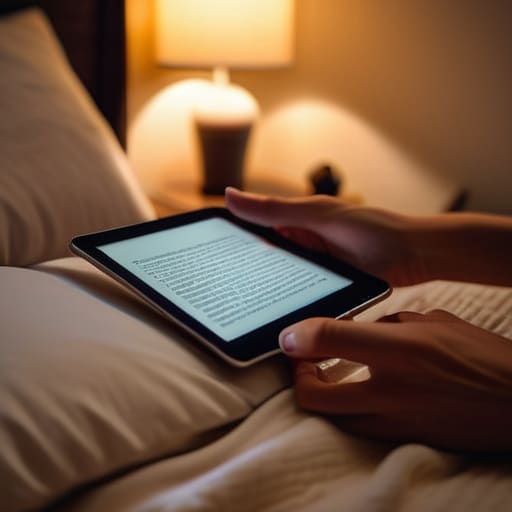
I remember the first time I tried to read a novel on a standard tablet late at night. By chapter three, my eyes felt like they were being scraped with sandpaper. It was a harsh reminder that our biology wasn’t exactly designed for the constant blue-light bombardment of modern screens. This is where the distinction between a tablet and a dedicated device becomes vital.
The real magic lies in e-ink display technology. Unlike a smartphone that projects light directly into your retinas, e-ink mimics the way ink sits on paper, reflecting ambient light instead. It’s a subtle but profound difference that fundamentally changes the experience of eye strain and e-readers. When I’m winding down after a long day of staring at spreadsheets, I need a medium that respects my physical limits rather than fighting them.
Beyond just the visual comfort, I’ve found that the ability to adjust font sizes and contrast serves as a massive win for long-term usability. These accessibility features for readers mean that the device adapts to your changing needs, rather than forcing you to squint and strain against a static layout. It’s one of those rare instances where the tech actually works to support our natural human rhythms.
Making the Tech Work for You, Not the Other Way Around
- Lean into the “Do Not Disturb” lifestyle. One of the best things about an e-reader is that it isn’t a smartphone; it doesn’t ping you with work emails or social media notifications. Use that isolation to actually finish a chapter without being interrupted by the digital noise.
- Customize your font to suit your mood. I’ve found that when my eyes are tired after a long day of staring at spreadsheets, bumping up the text size and switching to a heavier weight makes a world of difference. Don’t struggle through small print just because that’s how the book was originally laid out.
- Use the built-in lighting, but do it mindfully. Most of these devices have adjustable warmth settings. If you’re reading in bed, dial the warmth up. It mimics that soft, amber glow of a reading lamp and keeps your brain from thinking it’s midday, which helps you actually wind down.
- Embrace the dictionary feature without the friction. I used to keep a physical dictionary nearby, which felt clunky. Now, I just tap a word. It keeps the flow of the story alive instead of breaking my concentration to go hunt for a definition.
- Keep your library organized, but don’t obsess. The benefit of having a thousand books in your pocket is the freedom to pivot. If a heavy non-fiction book isn’t clicking, swap it for a light novel in seconds. Technology should give you the permission to follow your curiosity, not force you to finish a slog.
Finding Your Own Rhythm
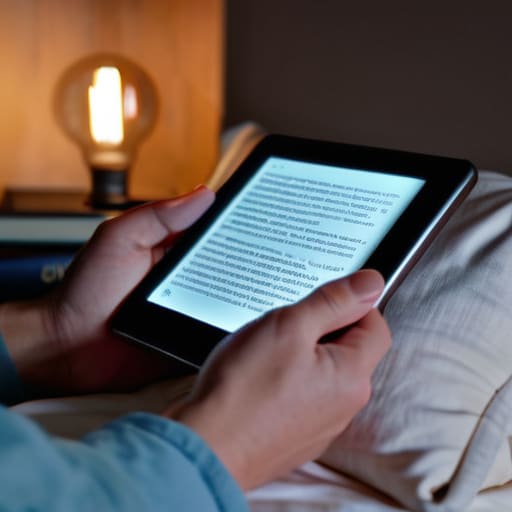
Don’t let the tech decide for you; use e-readers for convenience and travel, but keep your physical books for the moments when you need to truly unplug.
Prioritize your physical well-being by using e-ink technology and proper lighting to ensure your digital reading habit doesn’t come at the cost of your eyesight.
Treat your reading time as a sanctuary, using the tools that best protect your focus and help you reclaim quiet space in an increasingly loud world.
The Freedom of a Lighter Load
“An e-reader shouldn’t be another device competing for your attention; it should be the tool that finally lets you carry an entire library without the physical weight, allowing you to reclaim those quiet, stolen moments of reading anywhere life takes you.”
Yvette Marchetti
Finding Your Own Rhythm
At the end of the day, an e-reader isn’t a replacement for the soul of a physical library, but rather a tool to help us maintain our connection to reading in a world that is constantly trying to pull us toward something louder and more distracting. We’ve looked at how they can ease the physical strain on our eyes and how they offer a quiet, portable sanctuary compared to the clutter of traditional paperbacks. Whether you’re using one to squeeze in a few chapters during a hectic commute or to wind down before bed without the blue-light headache, the goal is the same: minimizing the friction between you and the stories you love. It’s about choosing the medium that serves your life, rather than letting the device dictate your habits.
My advice? Don’t get caught up in the tech hype or the debate over which format is “superior.” Technology should be a bridge, not a barrier. If a digital device allows you to reclaim a moment of stillness in a chaotic schedule, then it has done its job well. We need to be the ones in the driver’s seat, deciding when to plug in and when to pull back. Ultimately, real progress isn’t about having the most gadgets; it’s about protecting your capacity to focus and finding the space to simply exist within a good book.
Frequently Asked Questions
How do I balance the convenience of a digital library with the tactile satisfaction of owning physical books?
I’ve settled on a “hybrid shelf” approach. I use my e-reader for the heavy lifting—commutes, travel, or those late nights when I don’t want a bulky hardcover weighing down the bedsheets. But for the books that actually shift my perspective? I buy them in print. There’s a specific kind of permanence in a physical spine on a shelf that a digital file just can’t mimic. Use tech for utility, but keep the physical for the soul.
Are there specific e-reader models that actually feel less "techy" and more like a dedicated reading tool?
If you’re looking to escape the “gadget” feel, steer clear of anything with a bright, glossy touchscreen that mimics an iPad. I tend to gravitate toward the Kindle Paperwhite or the Kobo Libra because they prioritize E Ink—that matte, paper-like texture that doesn’t scream “digital device.” They feel less like a portal to distractions and more like a quiet, dedicated tool. It’s about finding something that disappears in your hands.
Can an e-reader actually help me reduce my overall screen time, or is it just another device competing for my attention?
It’s a valid fear. If you’re jumping from a Kindle straight into an Instagram scroll, you haven’t escaped the noise; you’ve just changed the vessel. But for me, the difference is intentionality. An e-reader is a single-purpose tool. It doesn’t ping with emails or demand likes. When I pick it up, I’m making a conscious choice to read, not to “consume content.” It’s about creating a digital boundary that protects your focus.
