
I was sitting in a sun-drenched cafe in Lisbon last month, watching a twenty-something struggle to find a stable Wi-Fi signal while simultaneously trying to film a “day in the life” reel. The sheer performance of it all felt exhausting. We’ve been sold this glossy, filtered version of digital nomadism that promises endless sunsets and spontaneous adventures, but most of the time, it’s just repackaging the same old burnout in a prettier location. If you think swapping your cubicle for a beach bungalow means you’ve escaped the grind, you aren’t just mistaken—you’re setting yourself up for a very expensive kind of loneliness.
I’m not here to sell you on a lifestyle aesthetic or tell you to quit your job tomorrow. Instead, I want to pull back the curtain on what actually happens when the laptop lid closes and the novelty wears off. I’m going to share the practical, unvarnished reality of managing a career across time zones and the essential boundaries you need to set to ensure your mobility doesn’t become a portable leash. Let’s talk about how to actually reclaim your freedom without losing your mind in the process.
Table of Contents
- Beyond the Aesthetic Navigating Digital Nomad Visa Requirements
- Traveling While Working Full Time Without Losing Your Soul
- The Survival Kit: How to Not Lose Your Mind While Chasing the Horizon
- The Bottom Line: Reclaiming Your Agency
- The Mirage of the Infinite Office
- The Reality Check
- Frequently Asked Questions
Beyond the Aesthetic Navigating Digital Nomad Visa Requirements
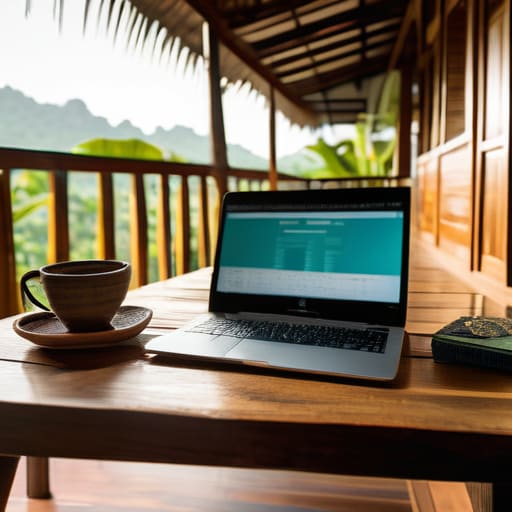
If you’ve spent any time scrolling through Instagram, you’ve seen the dream: a sun-drenched villa in Bali and a laptop perched precariously on a wooden table. But before you pack your bags, let’s talk about the paperwork that actually dictates your reality. Navigating digital nomad visa requirements is rarely as seamless as a filtered photo suggests. Most countries are finally opening their doors, but they aren’t doing it out of pure hospitality; they want proof of stable income and a clear understanding of your legal status. It’s easy to get swept up in the romance of new scenery, but failing to account for the fine print can turn a dream trip into a bureaucratic nightmare.
Then, there is the heavy hitter that no one likes to discuss: the digital nomad tax implications. Just because you aren’t sitting in a cubicle in Michigan doesn’t mean the taxman has forgotten you exist. You could easily find yourself caught in a web of dual taxation if you aren’t careful about how long you stay in a single jurisdiction. True mobility requires rigorous planning, not just a sense of adventure. If you want this lifestyle to be sustainable rather than a chaotic sprint, you have to treat the logistics with as much respect as your actual job.
Traveling While Working Full Time Without Losing Your Soul

The real danger isn’t the logistics; it’s the slow, creeping erosion of your boundaries. When your office is a café in Lisbon or a beachfront bungalow in Bali, the lines between “on” and “off” don’t just blur—they vanish. I’ve seen too many people fall into the trap of thinking that traveling while working full time is a continuous vacation, only to realize they’ve just become highly mobile, highly stressed employees. If you don’t intentionally build walls around your deep-work hours, you’ll find yourself answering Slack notifications at sunset, effectively turning your dream life into a perpetual, uncompensated overtime session.
To survive this without burning out, you have to treat your schedule with more respect than your itinerary. This means scouting out reliable coworking spaces worldwide before you even book your flight, rather than hoping the hotel Wi-Fi holds up during a client call. You need a ritual—a physical cue that work has started and ended. For me, it’s closing my laptop and putting it in a specific drawer. It’s about reclaiming your agency so that the destination serves your life, rather than your job simply consuming your view.
The Survival Kit: How to Not Lose Your Mind While Chasing the Horizon
- Prioritize “Boring” Infrastructure over “Beautiful” Views. A sunset over the Amalfi Coast is great, but it won’t help you hit a deadline if the local Wi-Fi is a joke. Before you book that Airbnb, demand a speed test screenshot. I’ve learned the hard way that a “charming” stone cottage is often just a signal graveyard.
- Build a “Portable Office” Ritual. When your workspace changes every two weeks, your brain loses its cues for focus. Whether it’s a specific pair of noise-canceling headphones or a particular scent of candle, create a sensory trigger that tells your mind, “The work starts now,” regardless of whether you’re in a cafe in Lisbon or a library in Chiang Mai.
- Protect Your Social Baseline. The biggest lie about nomad life is that you’ll make instant best friends at every hostel. You won’t. Constant novelty is exhausting. Schedule “non-negotiable” time to call people who actually know your history—the ones who don’t care about your Instagram feed—to keep yourself grounded in reality.
- Audit Your “Always-On” Settings. The danger of working from anywhere is that you end up working from everywhere, all the time. Set hard boundaries for your digital availability. If you don’t define your working hours, your clients and colleagues will slowly colonize your entire itinerary.
- Keep a “Physical Anchor” in Your Luggage. In a life lived through screens and transit hubs, something tactile matters. For me, it’s my paper planner and a small set of woodworking tools. Having something that requires your hands and doesn’t require a battery is the quickest way to remind yourself that you are a person, not just a node in a network.
The Bottom Line: Reclaiming Your Agency
Don’t mistake a change in scenery for a change in lifestyle; if your work habits are chaotic at home, a beach in Bali will only make them more expensive and more exhausting.
Prioritize legal and logistical stability over the “vibe”—the freedom you’re chasing vanishes the moment you’re dealing with a visa crisis or a broken contract.
True digital mobility is measured by your ability to disconnect, not by how many different time zones you can manage to attend a Zoom call in.
The Mirage of the Infinite Office
We’ve been sold this glossy vision of working from a beach in Bali, but let’s be honest: a sunset is a terrible substitute for a stable routine, and a Wi-Fi signal isn’t a substitute for a sense of belonging. If your “freedom” just means you’re answering Slack notifications in a different time zone, you haven’t escaped the grind—you’ve just brought the office with you.
Yvette Marchetti
The Reality Check

At the end of the day, escaping the cubicle isn’t as simple as downloading a VPN and booking a one-way flight to Bali. We’ve talked about the logistical hurdles of visas, the necessity of a disciplined routine, and the mental toll of constant movement. If you ignore the paperwork or fail to set boundaries with your employer, you aren’t a nomad; you’re just an employee with a worse ergonomic setup and a higher chance of burnout. True digital nomadism requires more than just a laptop and a dream; it requires a rigorous commitment to structure so that the scenery changes without your professional life collapsing into chaos.
I don’t want to discourage the wanderlust—far from it. There is something deeply restorative about seeing the world through a lens that isn’t filtered by a commute. But as you pack your bags, I challenge you to remember that the goal is to gain autonomy, not just a new backdrop for your Zoom calls. Don’t let the pursuit of the “perfect lifestyle” become another treadmill of consumption and comparison. Seek out a way of living that actually deepens your connection to the world around you, ensuring that your technology remains a tool for exploration rather than a portable leash that keeps you tethered to the very grind you’re trying to escape.
Frequently Asked Questions
How do I actually manage my tax obligations and legal residency without getting into a mess with the IRS?
Look, this is where the romanticism of the beachside office meets the cold, hard reality of bureaucracy. Don’t wing it. The IRS doesn’t care about your “freedom seeker” aesthetic; they care about residency and tax nexus. My advice? Hire a cross-border tax specialist before you book that flight. You need to understand the Foreign Earned Income Exclusion and how your physical presence affects your status. Get a paper trail, keep your records organized, and don’t let a math error turn your dream life into a legal nightmare.
What are the most realistic ways to build a sense of community and prevent the isolation that comes with constant moving?
The hardest part isn’t the logistics; it’s the quiet moments when you realize you haven’t had a real conversation in three days. To fight that, stop looking for “digital nomad hubs”—they’re often just shallow networking loops. Instead, look for “third places”: local pottery studios, run clubs, or even a consistent corner in a neighborhood cafe. Find a rhythm. Consistency, even in a transient life, is the only way to turn strangers into a temporary village.
How can I maintain a consistent routine and professional discipline when my "office" changes every few weeks?
The secret isn’t finding the perfect café; it’s building “portable anchors.” I’ve learned that if I don’t carry my own rituals, the scenery will swallow my productivity. Pick three non-negotiables—maybe it’s a specific playlist, a certain type of tea, or a twenty-minute morning walk—and do them regardless of your zip code. These small, repeatable acts signal to your brain that it’s time to work, no matter how much the view changes.
