I was mid-way through sanding down a stubborn walnut veneer on a 1962 sideboard last Tuesday when my phone buzzed with another breathless headline about the “revolution” of smart clothing. The article promised that my future wardrobe would soon be an intelligent ecosystem, monitoring my vitals and optimizing my posture in real-time. Honestly? It sounded less like a convenience and more like a surrender. We’ve spent the last decade trying to disconnect from the constant hum of notifications, yet now we’re being told the solution is to weave those very same sensors directly into the fabric against our skin.
I’m not here to tell you that these gadgets are magic, nor am I going to pretend that we don’t need better health data. What I want to do is strip away the marketing gloss and look at what this tech actually costs us in terms of privacy and mental clutter. Over the next few minutes, I’ll be sharing a pragmatic breakdown of where smart clothing actually adds value to a busy life and where it’s just expensive noise designed to turn your body into a permanent data point.
Table of Contents
- The Promise of Biometric Sensor Integration
- When Connected Apparel Trends Become Digital Noise
- How to Vet Your Wardrobe Without Losing Your Soul
- The Bottom Line: Finding Balance in a Connected Wardrobe
- The Cost of Constant Connection
- Finding the Balance Between Fabric and Data
- Frequently Asked Questions
The Promise of Biometric Sensor Integration
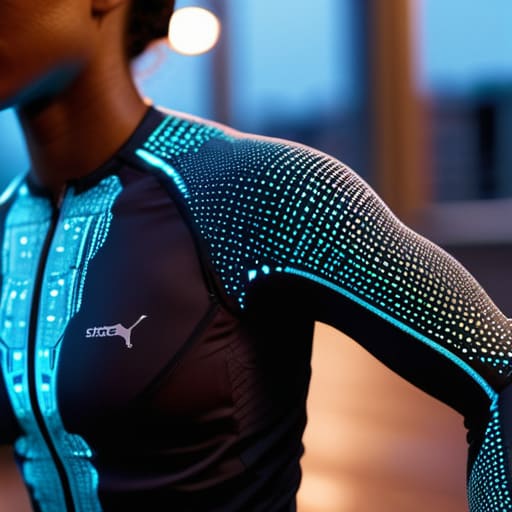
On paper, the potential for biometric sensor integration is nothing short of revolutionary. We aren’t just talking about a watch strapped to a wrist anymore; we’re looking at a future where the very fibers of our shirts act as a continuous, silent diagnostic tool. Through advancements in e-textiles technology, these garments can monitor heart rate variability, respiratory patterns, and even sweat composition without the intrusive bulk of traditional medical devices. For someone managing a chronic condition or an athlete pushing their limits, this kind of seamless data collection could be a lifeline of real-time insights.
However, as someone who spent years in HR watching how “optimization” can quickly turn into “surveillance,” I can’t help but pause. The industry promises that these health monitoring garments will empower us to take control of our well-being. But there is a fine line between proactive wellness and becoming a walking, breathing data set. As these smart fabric applications move from niche athletic gear into our everyday wardrobes, we have to decide if we are using this data to live better, or if we are simply inviting another layer of digital oversight into our most private, physical moments.
When Connected Apparel Trends Become Digital Noise

The problem with the current rush toward connected apparel trends is that we often mistake constant data for actual insight. We’re being sold the idea that if we just layer enough e-textiles technology into our daily wardrobe, we’ll finally achieve some kind of optimized version of ourselves. But there is a thin, blurry line between being “informed” and being constantly interrupted. I’ve spent enough time in corporate HR to know that when every movement is tracked and every physiological spike is logged, people don’t feel empowered—they feel surveilled.
When our very clothes start buzzing to tell us we’re stressed or that our heart rate is slightly off, it creates a layer of cognitive clutter that’s hard to shake. We risk turning the simple, tactile comfort of a sweater or a pair of leggings into another dashboard that demands our attention. If we aren’t careful, these smart fabric applications won’t actually help us live better; they’ll just ensure we never have a moment of unplugged peace again. We need to decide if we want our wardrobe to be a tool or just another source of digital noise.
How to Vet Your Wardrobe Without Losing Your Soul
- Look for “invisible” utility. If a garment requires you to stare at an app every ten minutes just to make it functional, it isn’t clothing anymore—it’s a wearable computer that happens to be made of fabric. Real progress should feel seamless, not like another chore on your digital to-do list.
- Prioritize data sovereignty over data collection. Before you buy into a brand, ask where that biometric data actually lives. If the company’s business model relies on selling your heart rate variability to insurance providers, you aren’t the customer; you’re the product being harvested.
- Demand durability that outlasts the software cycle. I spend my weekends restoring mid-century furniture because it was built to last decades, not until the next firmware update. Don’t invest in “smart” pieces that become expensive, non-functional rags the moment the manufacturer stops supporting the app.
- Check the “analog fallback” factor. A good piece of tech should enhance your life when it’s on, but it shouldn’t ruin your day when it’s off. If you can’t wear the shirt comfortably or use it normally when the battery dies, it’s a gimmick, not a tool.
- Guard your sensory boundaries. There is a fine line between a shirt that monitors your posture and one that creates a constant stream of notifications. Choose tech that provides quiet, meaningful insights rather than the kind of digital noise that keeps your nervous system in a state of perpetual alert.
The Bottom Line: Finding Balance in a Connected Wardrobe
We need to distinguish between tech that serves a genuine purpose—like medical monitoring—and tech that is just another way to monetize our personal data through our clothes.
Before embracing smart fabrics, ask yourself if the convenience of the data is worth the loss of privacy and the mental clutter of constant notifications.
Real progress isn’t about how many sensors we can stitch into a sleeve; it’s about ensuring technology remains a tool for our well-being rather than a digital leash.
The Cost of Constant Connection
“We need to be careful that in our rush to optimize every heartbeat and step, we don’t end up turning the very clothes on our backs into another layer of surveillance that we can never truly take off.”
Yvette Marchetti
Finding the Balance Between Fabric and Data

At the end of the day, smart clothing sits at a messy crossroads. We’ve looked at the incredible potential for biometric sensors to revolutionize healthcare and the looming shadow of digital noise that threatens to turn our very skin into a dashboard for constant monitoring. While the ability to track physiological shifts in real-time is a legitimate breakthrough, we can’t ignore the friction it creates between our need for privacy and our desire for optimization. We have to decide if we want our clothes to be tools that serve us, or if we are okay with them becoming another layer of surveillance that we simply can’t take off.
As I sit here at my desk, looking at a mid-century chair I’m halfway through restoring, I’m reminded that the best designs are the ones that feel natural, not the ones that demand your constant attention. Technology should be like a well-made piece of furniture: sturdy, functional, and largely invisible when it’s doing its job right. Let’s push for smart textiles that empower us without overwhelming us. We should strive for a future where technology enhances our physical agency rather than dictating our every move. After all, the goal isn’t to live more efficiently; it’s to live more meaningfully.
Frequently Asked Questions
How much of this data is actually staying on my device, and how much is being sold to the highest bidder?
Here’s the uncomfortable truth: most of it isn’t staying on your device. While companies love to market “local processing” for privacy, the real value lies in the aggregate. Your heart rate, sleep patterns, and even movement data are goldmines for advertisers and insurers. Unless a brand has a transparent, ironclad privacy policy—and even then, you should be skeptical—assume your biological data is being packaged, moved to the cloud, and sold to the highest bidder.
Is the durability of these garments actually worth the price tag, or will they be obsolete in two years when the software updates stop?
That’s the million-dollar question, isn’t it? We’re used to discarding fast fashion, but we aren’t used to our clothes having a shelf life dictated by a software developer in Silicon Valley. Honestly, I’m skeptical. If the app stops syncing or the firmware becomes unsupported, you’re left with an expensive, non-functional rag. Until these companies commit to long-term support cycles, I’m keeping my money in my pocket and my cotton basics close.
At what point does a piece of clothing stop being a tool for health and start becoming a constant, intrusive monitor that we can never truly "unplug" from?
It happens the moment the data starts dictating your behavior rather than informing it. When you stop wearing a shirt because you’re “too stressed” according to an algorithm, or when you feel a phantom itch of anxiety because your leggings haven’t synced with the cloud, the tool has become the master. We cross that line when the garment stops serving our comfort and starts demanding our constant, neurotic attention.
