
I was sitting in a local coffee shop last Tuesday, watching a twenty-something frantically swipe through three different apps just to secure a delivery route, and it hit me: we’ve been sold a lie. The tech industry loves to wrap everything in the shiny packaging of “flexibility,” but if you look closely at current gig economy trends, it often feels less like freedom and more like a high-speed race to the bottom. We are told these platforms empower us, yet most people I talk to feel like they’re just running on a digital treadmill that never actually stops.
I’m not here to give you a cheerleader’s pep talk or a list of “get rich quick” hacks found in a Silicon Valley press release. Instead, I want to look at what’s actually happening beneath the surface of these shifts. I promise to provide a grounded, no-nonsense breakdown of how these changes affect your autonomy and your wallet. We’re going to strip away the hype and figure out which of these trends actually offer real leverage, and which ones are just sophisticated ways to keep you tethered to your phone.
Table of Contents
Automation in the Platform Economy Progress or Erasure
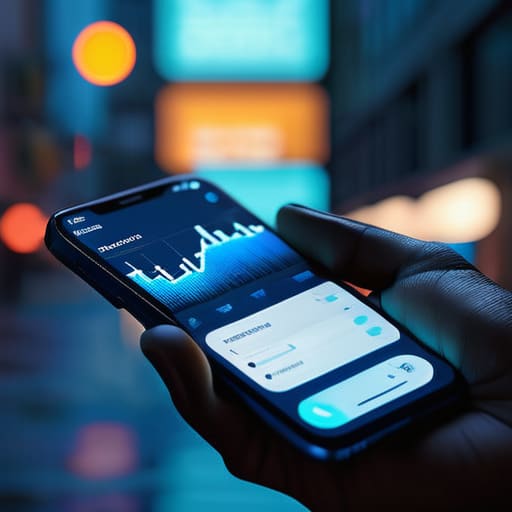
We’re told that automation in the platform economy is the ultimate efficiency play, a way to strip away the friction of human error. But as someone who spent years in HR, I see a different side of that coin. When an algorithm replaces a human manager to assign tasks or evaluate performance, we aren’t just optimizing a workflow; we are removing the nuance that makes work sustainable. It turns the on-demand labor market into a series of cold, binary transactions where the worker is often just a data point to be squeezed for maximum output.
The real danger isn’t just the loss of a job to a bot—it’s the loss of agency. When the “boss” is a line of code, there is no room for negotiation, no empathy for a personal crisis, and no way to appeal a sudden drop in your rating. We are witnessing a shift where the tools meant to liberate us from repetitive tasks are instead being used to standardize human behavior into something a machine can more easily process. If we aren’t careful, we’ll find ourselves working for systems that don’t even know we’re human.
The on Demand Labor Market Efficiency at What Cost

We’ve become obsessed with the idea of “instant.” If I want a ride, a meal, or a freelance graphic designer, I can have it with a thumbprint. This efficiency is seductive, but the on-demand labor market operates on a logic that often ignores the person behind the service. We treat human labor like a utility—something that should be available at the flick of a switch, without the “inconvenience” of benefits, predictable hours, or even basic stability.
The friction arises when we realize that this seamless user experience is often subsidized by the precariousness of the worker. While some find liberation in monetizing skills online on their own terms, many others find themselves trapped in a cycle of algorithmic management. They aren’t managing their own time; they are being managed by a piece of code that doesn’t care if they’re sick or if their car breaks down. As we push further into this model, we have to decide if we are building a more flexible world or simply a more disposable one.
Survival Strategies for the Algorithmic Age
- Diversify your digital toolkit. Don’t pin your entire livelihood to a single platform; when an algorithm changes or an app decides to pivot, you don’t want to be left standing in the middle of a digital desert.
- Prioritize “analog” networking. In a world of automated matching, the old-school handshake still holds weight. Build real, human connections outside of the apps to ensure your reputation isn’t just a star rating.
- Audit your digital boundaries. It’s easy to let the “always-on” nature of gig work bleed into your personal time. Set hard stops for checking notifications so you aren’t just a servant to the ping.
- Invest in portable skills. Focus on learning things that aren’t easily replicated by a prompt or a piece of code—nuance, complex problem-solving, and empathy are your best defenses against automation.
- Demand transparency. Whether it’s through professional guilds or sheer persistence, push for clearer insights into how these platforms calculate your pay and manage your performance.
The Bottom Line: Finding Our Footing in the Gig Shift
We need to stop equating “speed” with “progress.” Just because an algorithm can match a worker to a task in seconds doesn’t mean the system is actually working for the human at the other end of the screen.
Real flexibility shouldn’t come at the expense of stability. If a new platform offers “autonomy” but strips away the ability to plan a life outside of work, it’s not freedom—it’s just a more efficient kind of tether.
As we move forward, our focus must shift from how much more we can automate to how much more we can protect. The goal should be using these tools to support human livelihoods, not to optimize people into mere data points.
The Illusion of Autonomy
We keep calling it the ‘freedom economy,’ but there’s a massive difference between choosing your own hours and being managed by an algorithm that doesn’t know you have a life outside of a notification.
Yvette Marchetti
Reclaiming the Human Element

At the end of the day, we have to look past the sleek interfaces and the promises of “frictionless” labor to see what’s actually happening beneath the surface. We’ve seen how automation threatens to erase the nuance of human skill and how the relentless drive for on-demand efficiency often comes at the expense of actual stability. The gig economy isn’t inherently bad, but we cannot allow it to become a race to the bottom where workers are treated as mere data points in an algorithm. If we aren’t careful, we’ll find ourselves living in a world that is hyper-efficient but utterly hollow.
As we move forward into this increasingly digital landscape, I want to challenge you to hold onto your agency. Don’t just accept the new “standard” because an app told you it was easier; instead, demand tools that serve your life rather than tools that demand your constant attention. Real progress shouldn’t feel like a treadmill you can’t step off of. We must advocate for a future where technology acts as a scaffold for our ambitions, not a cage for our autonomy. Let’s make sure we are building systems that respect our humanity, rather than just optimizing ourselves out of it.
Frequently Asked Questions
If we keep automating the entry-level tasks, how are people supposed to gain the experience needed to move up the ladder?
That’s the million-dollar question, isn’t it? We’re essentially cutting off the bottom rungs of the ladder and wondering why no one can reach the top. If we automate every “grunt work” task, we strip away the very sandbox where people learn the nuances of their craft. We risk creating a massive talent gap where we have senior experts but no way to cultivate the next generation. It’s not just an efficiency problem; it’s a structural crisis.
Is there a way to build a gig economy that actually offers the stability of a traditional job without losing the flexibility we're promised?
It’s the million-dollar question, isn’t it? To get there, we have to stop treating gig workers like interchangeable software modules and start treating them like human stakeholders. We need portable benefits—health insurance and retirement plans that follow the person, not the platform. If we can decouple security from a single employer and bake it into the digital infrastructure itself, we might actually achieve that elusive balance of autonomy and peace of mind.
As these platforms become more sophisticated, how much control are we actually giving up to an algorithm in exchange for convenience?
We’re trading agency for frictionless living, and it’s a steep price. When an algorithm decides your route, your pay, or your next “opportunity,” you aren’t really a freelancer anymore; you’re a data point in someone else’s optimization loop. It feels like convenience, but it’s actually a subtle erosion of autonomy. We have to ask ourselves: if we can’t negotiate with the system, are we actually working, or are we just being managed by math?
