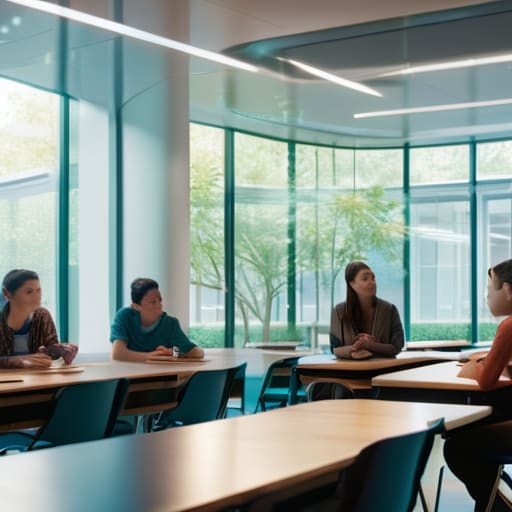
I was sitting at my kitchen table last Tuesday, sanding down the legs of a vintage teak sideboard, when I saw another headline about how AI is going to “revolutionize” the classroom. It’s the same tired script: more screens, more algorithms, more expensive software that promises to fix everything. Honestly, I’m exhausted by the hype. We keep talking about the future of education as if it’s something that happens to our children through a high-speed connection, rather than something we build through human interaction. We are so busy chasing the next shiny gadget that we’ve forgotten that learning is, at its core, a deeply social and messy process.
I’m not here to tell you which subscription service will make your kid a genius, and I’m certainly not interested in selling you on a digital utopia. Instead, I want to look at what actually matters. Over the next few sections, I’m going to cut through the noise to explore how we can leverage new tools without sacrificing the human element that makes learning stick. We’ll talk about finding a balance that prioritizes critical thinking over mere data consumption, ensuring technology serves the student rather than the other way around.
Table of Contents
Artificial Intelligence in the Classroom Tool or Replacement

I’ve spent enough time in HR to know that whenever a new “efficiency tool” rolls out, people start sweating about their job security. We’re seeing that same anxiety now with artificial intelligence in the classroom. The hype suggests these algorithms can act as a sort of digital tutor, creating personalized learning pathways that adapt to every student’s unique pace. On paper, it sounds like a dream—no child gets left behind because the software adjusts in real-time.
But here’s where my skepticism kicks in. If we lean too hard on the automation, we risk turning teaching into a mere supervisory role rather than a deeply human connection. An AI can grade a math quiz or suggest a reading list, but it can’t sense when a student is having a bad day or when a quiet kid finally finds their voice. We have to ensure these tools remain exactly that: tools. If we let them become the primary drivers of instruction, we aren’t just changing how kids learn; we are eroding the mentorship that sits at the very heart of a real education.
Personalized Learning Pathways Freedom or Digital Confinement

The promise of personalized learning pathways is seductive: an algorithm that understands exactly when a student is struggling and pivots the curriculum in real-time. On paper, it’s the dream of bespoke instruction that even the most overworked teacher couldn’t provide manually. But as someone who spent years watching corporate “optimization” tools strip the soul out of HR, I can’t help but wonder about the cost. If we hand the reins entirely to an algorithm, are we actually fostering curiosity, or are we just training kids to follow a highly efficient, pre-determined track?
There is a fine line between a tool that supports a student and a system that boxes them in. When we lean too heavily on gamification in education to keep engagement high, we risk turning the pursuit of knowledge into a mere dopamine chase. We might be teaching them how to win the game, but are we teaching them how to think? True growth usually happens in the messy, unscripted moments of struggle—the parts of learning that don’t always fit into a clean, data-driven personalized learning pathway. We need to ensure these digital tools remain scaffolds, not cages.
Keeping the Human Element in a High-Tech Classroom
- Prioritize mentorship over algorithms. No matter how sophisticated a learning platform gets, it can’t offer the empathy or moral guidance a human teacher provides. We need to ensure tech stays in the role of a teaching assistant, not the lead instructor.
- Protect the “analog” moments. We shouldn’t be afraid to put the tablets away. Real breakthroughs often happen during unscripted, face-to-face debates or through tactile, hands-on projects that a screen simply can’t replicate.
- Teach digital discernment, not just digital literacy. It’s not enough to know how to use a tool; students need to understand the biases baked into the software. We have to teach them to question the source, not just click the link.
- Guard against data-driven pigeonholing. Personalized learning is great until it becomes a digital cage that decides a child’s potential based on a single test score. We must leave plenty of room for students to change their minds and outgrow their data profiles.
- Focus on soft skills that machines can’t mimic. As automation handles more rote tasks, the real value of education will lie in teaching critical thinking, emotional intelligence, and complex problem-solving—the things that make us human.
The Human Bottom Line
Technology should be a scaffold for curiosity, not a substitute for the mentorship and social nuance that only a human teacher can provide.
We must guard against “algorithm-driven” learning that optimizes for test scores but ignores the messy, essential process of critical thinking.
Real educational progress isn’t about how many tablets we put in kids’ hands, but how much agency and intellectual freedom those tools actually grant them.
The Human Variable
“We keep trying to optimize the classroom like it’s a piece of software, but you can’t debug a child’s curiosity or automate the spark that happens when a mentor truly sees a student. If we trade mentorship for algorithms, we aren’t educating; we’re just processing data.”
Yvette Marchetti
Finding the Human Equilibrium

At the end of the day, we can’t ignore the shift. We’ve looked at how AI threatens to overshadow the mentor-student bond and how personalized algorithms, while efficient, risk turning learning into a curated echo chamber. If we lean too hard into the automation, we aren’t just streamlining education; we are stripping away the productive friction that forces a student to think critically and struggle through a problem. Technology should be the scaffolding that supports a building, not the concrete that replaces the foundation. We have to ensure that these tools remain auxiliary instruments rather than the architects of our children’s intellect.
As I sit here at my desk, looking at my paper planner and thinking about the systems we build, I’m reminded that true progress isn’t about how much data we can collect on a learner. It’s about how much agency we can protect. The future of education shouldn’t be a race toward total automation, but a deliberate effort to use digital tools to free up more time for human connection, mentorship, and messy, unscripted curiosity. Let’s build a system that uses the silicon to empower the soul, ensuring that we are using technology to expand our horizons, not just to narrow our focus.
Frequently Asked Questions
How do we ensure that kids don't lose their ability to think critically when an algorithm is constantly feeding them the "perfect" answer?
We have to stop treating the “correct” answer like the finish line. If an algorithm hands a kid the solution before they’ve even wrestled with the problem, we aren’t teaching them to learn; we’re teaching them to comply. We need to shift the focus back to the friction—the messy, frustrating process of questioning sources and connecting dots. Education should be about learning how to ask better questions, not just how to prompt a machine for the quickest result.
As classrooms become more digitized, what happens to the social skills and human connection that only a physical school environment can provide?
That’s the question that keeps me up at night. We’re trading playground negotiations and eye contact for seamless interfaces. While a tablet can teach a kid algebra, it can’t teach them how to read a room or navigate a disagreement with a peer. If we automate every interaction, we risk raising a generation that is digitally brilliant but socially illiterate. We have to ensure the screen remains a window, not a wall.
Is the push for tech-driven education actually narrowing the gap between students, or is it just creating a new kind of digital divide?
I worry we’re just swapping old inequities for more sophisticated ones. On paper, tech promises a level playing field, but in practice, it often reinforces existing cracks. It’s not just about who has the latest tablet; it’s about who has the high-speed fiber, the quiet space to use it, and the digital literacy to navigate it without getting lost. If we aren’t careful, we aren’t closing gaps—we’re just digitizing them.
