
I was sitting in my home office last Tuesday, staring at a mid-century teak sideboard I’d been sanding, when a tech newsletter popped up on my screen. It was filled with the usual breathless jargon about how high performance computing is going to “revolutionize every facet of human existence” by next Tuesday. Honestly, it makes me want to roll my eyes so hard I’ll see my own brain. We’ve become obsessed with the sheer velocity of data, treating every new leap in processing power like a religious awakening, but we rarely stop to ask if all that raw speed is actually serving us. Are we building smarter systems, or are we just building faster ways to stay overwhelmed?
I’m not here to sell you on the magic of the silicon gods or help you navigate the marketing fluff. My goal is to strip away the noise and look at what this technology actually means for the people using it. I want to explore how we can harness the power of high performance computing to solve real, messy problems without losing our sense of direction in the process. This isn’t a technical manual; it’s a sanity check for anyone trying to figure out if these massive computational leaps are actually making our lives better or just louder.
Table of Contents
- The Exascale Computing Era Freedom or Just Faster Chaos
- Gpu Acceleration in Hpc Enhancing Vision or Replacing Intuition
- How to Keep Your Humanity in the Age of Exascale Processing
- The Bottom Line: Keeping Our Humanity in the Age of Exascale
- The Speed Trap
- The Human Bottom Line
- Frequently Asked Questions
The Exascale Computing Era Freedom or Just Faster Chaos
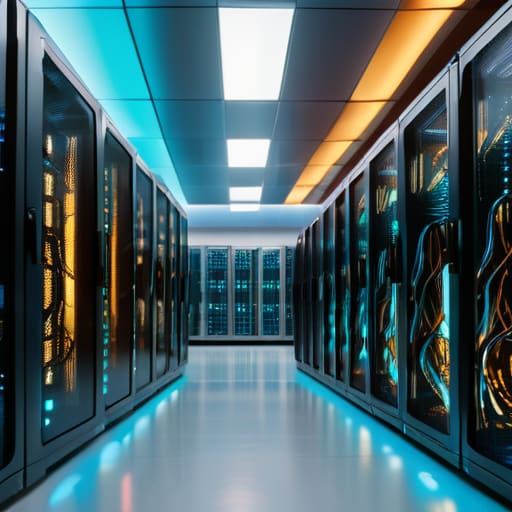
We’ve officially entered the exascale computing era, a milestone that sounds more like science fiction than a technical reality. On paper, it’s a triumph: we are talking about machines capable of performing a quintillion calculations per second. But as someone who spent years watching corporate “efficiencies” actually just lead to more frantic meetings, I can’t help but wonder where all that raw power is actually going. Are we using this to solve the climate crisis or to simulate more complex consumer behavior just to sell us things we don’t need?
The sheer scale of it is staggering. To reach these speeds, engineers are leaning heavily into gpu acceleration in HPC and complex distributed computing architectures to manage the workload. It’s a marvel of engineering, certainly, but there is a growing tension between the technical capability and the human purpose behind it. If we are building these massive digital engines, we have to ensure they are serving our long-term stability rather than just accelerating the noise and chaos of an already hyper-connected world.
Gpu Acceleration in Hpc Enhancing Vision or Replacing Intuition
We’ve reached a point where we aren’t just asking machines to do math; we’re asking them to simulate reality itself. When I look at the push for gpu acceleration in HPC, I see a double-edged sword. On one hand, the sheer speed at which these chips handle parallel tasks is breathtaking—it’s the difference between waiting weeks for a complex simulation in computational fluid dynamics and seeing the results before your morning coffee gets cold. That kind of efficiency is a genuine gift to researchers.
But there’s a subtle danger in how we rely on this raw power. As we lean harder into these massive, specialized engines, I worry we’re outsourcing the “why” to the “how fast.” There is a specific kind of human intuition—a gut feeling developed through years of observing patterns—that tells a scientist when a model looks off. If we become too enamored with the seamless output of a high-speed cluster, we might stop questioning the underlying logic. We risk trading our critical oversight for the convenience of a polished, automated answer.
How to Keep Your Humanity in the Age of Exascale Processing
- Prioritize outcome over raw speed; don’t let the sheer velocity of your computing power trick you into thinking you’re actually making meaningful progress if you haven’t defined what “success” looks like outside of a benchmark.
- Guard your decision-making intuition; use HPC to model possibilities, but never let the machine’s output become a substitute for the seasoned judgment that only comes from lived experience.
- Focus on sustainable architecture; as we push toward exascale, we have to ask if the massive energy cost of these systems is a fair trade for the problems they solve, or if we’re just building a more efficient way to burn through resources.
- Demand transparency in the “black box”; as high-performance models become more complex, insist on understanding the why behind the data so we don’t end up following directions from an algorithm we can no longer interrogate.
- Use the time you save to actually think; the greatest risk of massive computational efficiency is that we use the reclaimed time to simply cram more tasks into our day instead of using it for the deep, slow reflection that technology can’t replicate.
The Bottom Line: Keeping Our Humanity in the Age of Exascale
Speed isn’t a synonym for progress; we have to ensure that massive leaps in computing power are actually being used to solve human-centric problems rather than just fueling an endless cycle of data noise.
As we lean harder into GPU-driven automation, we must guard against losing the “gut feeling” and intuitive reasoning that make human expertise valuable in the first place.
The goal of high-performance computing should be to grant us more cognitive breathing room, not to create a high-speed treadmill that demands we work faster just to keep up with the machines.
The Speed Trap
“We’re so obsessed with building machines that can process quintillions of calculations per second that we’ve forgotten to ask if we actually have anything meaningful to say with the results. Speed is a tool, not a destination; if we use high-performance computing just to run in circles faster, we aren’t progressing—we’re just accelerating our own burnout.”
Yvette Marchetti
The Human Bottom Line
At the end of the day, we’ve looked at the sheer scale of exascale systems and the sheer speed of GPU acceleration, and the pattern is clear: we are building engines of unimaginable power. But power without direction is just noise. Whether we are simulating climate patterns or folding proteins, the risk remains that we become so enamored with the computational velocity that we forget to check if the destination is actually worth reaching. We can’t let the sheer math of high performance computing overshadow the human necessity of asking “why” before we ask “how fast.”
As I sit here at my desk, looking at my paper planner and thinking about the tactile reality of a well-made chair, I’m reminded that the best tools are the ones that disappear into the background, leaving us free to do the heavy lifting of thought and creativity. High performance computing should be the ultimate silent partner, a quiet foundation that allows our intuition to soar rather than a digital tide that drowns it out. Let’s ensure we are designing these systems to expand our agency, not just to automate our obsolescence. Real progress isn’t found in a faster processor; it’s found in the freedom to think deeper.
Frequently Asked Questions
If these massive computing powers are being used to solve climate change or medicine, why does it feel like the biggest winners are just more aggressive algorithms and high-frequency trading?
It’s a fair question, and honestly, it’s a frustrating one. We’re told these massive machines are the keys to curing diseases or modeling climate shifts, but the capital follows the path of least resistance. High-frequency trading is a closed loop—it’s designed to extract value from existing markets instantly. It doesn’t require the messy, long-term human collaboration that solving a global crisis does. We’ve built the engines; now we’re just letting the loudest, fastest money drive them.
As we move toward exascale computing, are we actually making scientific breakthroughs, or are we just creating a cycle where we need more power just to manage the data the previous generation produced?
It’s a valid concern, and frankly, it’s one I see mirrored in every tech cycle. We’re teetering on a feedback loop where we build massive computational engines just to process the mountain of noise the last one left behind. If we’re just spending all our energy managing data bloat rather than actually gaining insight, we aren’t advancing; we’re just running faster on a treadmill that’s getting bigger every year.
How do we ensure that the benefits of this massive computational leap don't just stay locked behind the doors of a few tech giants, leaving the rest of us to deal with the fallout?
It’s the oldest story in the book: a massive technological leap happens, and the gatekeepers immediately start building walls. If we don’t prioritize open-source frameworks and decentralized access, HPC becomes a private playground for the elite. We need to push for public-sector investment and democratized cloud resources. Otherwise, we aren’t actually advancing human knowledge; we’re just handing a faster engine to the people who already own the road.
