
Last Tuesday, I sat in a local coffee shop, surrounded by a dozen people, and realized I hadn’t heard a single word of actual conversation in twenty minutes. Instead, the room was filled with the rhythmic, lonely tapping of thumbs on glass. We’re constantly told that we are the most “connected” generation in history, yet we are drowning in a sea of social isolation that no high-speed fiber optic connection can fix. It’s a strange, modern paradox: we have five hundred “friends” in our pockets, but we can’t find a single person to grab a real, unscripted cup of coffee with without checking a notification.
I’m not here to sell you a new app or a mindfulness retreat that costs more than my vintage sideboard. My goal is to cut through the digital noise and look at the structural friction that’s pulling us apart. I want to talk about how we can reclaim our physical presence and build communities that actually hold weight in a world obsessed with the superficial. We’re going to explore practical, grounded ways to bridge the gap between our digital lives and our human need for belonging, without the usual tech-bro hype.
Table of Contents
- The Psychological Effects of Isolation in a Hyper Connected Era
- Remote Work and Social Disconnection Losing the Human Touch
- Reclaiming Connection in a World of Digital Noise
- Reclaiming Connection in a Digital World
- The Cost of Digital Proximity
- Finding Our Way Back to Each Other
- Frequently Asked Questions
The Psychological Effects of Isolation in a Hyper Connected Era
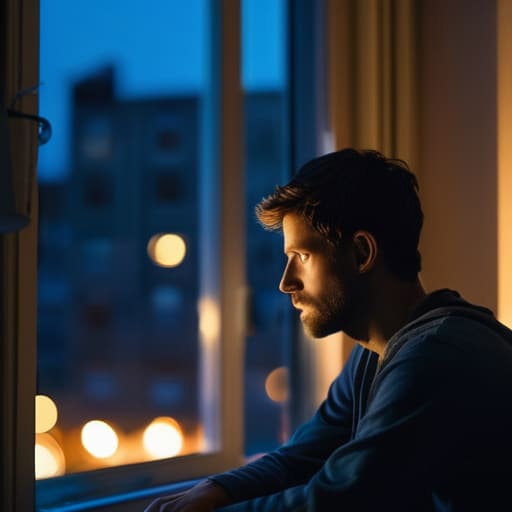
It’s a strange paradox, isn’t it? We have the entire world in our pockets, yet the impact of social withdrawal on mental health has never felt more acute. I see it in my consulting work all the time—people who are “connected” via Slack or Zoom all day, but by 5:00 PM, they realize they haven’t actually spoken to a human being in person for forty-eight hours. This constant state of digital tethering creates a specific kind of cognitive fatigue. We aren’t just tired; we’re starving for substance.
When we trade eye contact for emojis, we lose the subtle, non-verbal cues that tell our nervous systems we are safe and seen. This is where the real psychological effects of isolation begin to take root. It’s not just about being alone; it’s about the erosion of that sense of belonging. We’re living in a state of perpetual “nearness” that lacks actual intimacy, leaving us feeling more hollow than if we were truly solitary. It’s a quiet, creeping exhaustion that no amount of scrolling can fix.
Remote Work and Social Disconnection Losing the Human Touch

I remember the office coffee machine rituals—the forced small talk, the shared eye-rolls during long meetings, and the spontaneous brainstorming sessions that happened while walking to lunch. Now, my “office” is a desk in the corner of my living room, and my colleagues are mostly tiny, pixelated faces on a Zoom grid. While I love the lack of a commute, the reality of remote work and social disconnection is hitting harder than most tech optimists care to admit. We’ve traded the messy, unpredictable energy of a shared physical space for the sterile efficiency of Slack notifications, and something vital is being lost in the transition.
When your only human interaction is a scheduled video call, the subtle cues of body language and shared presence vanish. We are performing “work,” but we aren’t truly connecting. This lack of organic friction makes it incredibly difficult to foster a sense of belonging. Without those micro-moments of camaraderie, we risk drifting into a state of professional solitude, where we are constantly “on” but fundamentally alone. It’s a strange paradox: we have never been more reachable, yet we have never felt more unseen.
Reclaiming Connection in a World of Digital Noise
- Audit your digital diet. If your “socializing” consists mostly of scrolling through curated feeds, you aren’t connecting; you’re spectating. Trade ten minutes of mindless scrolling for one actual conversation—even if it’s just a quick phone call to a friend.
- Build “analog anchors” into your week. Whether it’s a local coffee shop, a community garden, or a woodworking class, find a physical space where you are a regular. Being a “known entity” in a physical community provides a sense of belonging that an algorithm can’t replicate.
- Embrace the friction of real-world interaction. Digital communication is designed to be seamless and low-stakes, which is exactly why it feels hollow. Don’t be afraid of the slight awkwardness of a face-to-face meeting or the effort it takes to plan something in person. That friction is where the humanity lives.
- Set strict boundaries for your “always-on” devices. We’ve fallen into the trap of thinking accessibility equals intimacy. It doesn’t. Use your tech as a tool to schedule real life, not as a substitute for it. Put the phone in another room when you’re eating or sitting with others.
- Practice “intentional presence” in small moments. You don’t need a massive social overhaul to fight isolation. Start by making eye contact with the barista or asking a neighbor how their week is going. These micro-connections act as small, necessary reminders that we are still part of a tangible, breathing world.
Reclaiming Connection in a Digital World
We need to stop confusing digital activity with actual social presence; a Slack notification is not a substitute for a shared lunch or a real conversation.
Intentionality is our best defense against isolation, meaning we must actively schedule “analog” time to balance out our digital obligations.
True progress isn’t about more connectivity, but about better quality; we should prioritize tools that foster genuine community rather than those that just drive engagement.
The Cost of Digital Proximity
We’ve mistaken constant connectivity for actual community, forgetting that a thousand digital notifications can never provide the same psychological anchor as a single, uninterrupted conversation in a room with another human being.
Yvette Marchetti
Finding Our Way Back to Each Other

We’ve spent the last few sections dissecting how the very tools designed to bring us together are often the same ones driving us into silos. From the psychological toll of digital-only interactions to the quiet erosion of workplace camaraderie in a remote-first world, the pattern is clear: we are over-stimulated but under-connected. We’ve mistaken constant accessibility for actual intimacy, and in doing so, we’ve allowed the nuance of human presence to be replaced by the convenience of a notification. It isn’t just about missing the watercooler chat; it’s about the slow, systemic loss of the spontaneous, unscripted moments that remind us we aren’t alone in this machine.
So, where do we go from here? I don’t think the answer is to throw our smartphones into the nearest lake and retreat to the woods, though some days it feels tempting. Instead, it’s about intentional friction. We need to choose the harder path—the phone call over the text, the coffee date over the Slack thread, and the face-to-face meeting over the video grid. We have to stop letting algorithms dictate the boundaries of our social lives. Real progress isn’t found in a faster connection speed; it’s found in the depth of the connections we choose to nurture with our own two hands.
Frequently Asked Questions
How do we distinguish between a healthy need for solitude and the dangerous slide into actual social isolation?
It’s the difference between choosing to step back and being pushed out. Solitude is a tool; it’s when I sit with my mid-century teak desk, coffee in hand, to actually think and recharge. It feels intentional. Isolation, however, feels heavy. It’s when the silence stops being restorative and starts feeling like a void. If your “quiet time” is driven by avoidance or a sense of being unable to connect, you’ve crossed the line.
Can digital communities ever truly replace the physiological benefits of being physically present with other people?
Short answer? No. You can find a sense of belonging in a Discord server or a niche subreddit, but you can’t download the oxytocin boost of a shared laugh or the grounding energy of sitting in a room with someone. Digital spaces offer connection, but they lack the sensory depth—the eye contact, the subtle body language—that our biology evolved to crave. We’re trying to satisfy a physical hunger with digital snacks. It’s never quite enough.
What practical steps can we take to rebuild genuine connection in a workplace that is increasingly designed for efficiency rather than interaction?
We have to stop treating “watercooler moments” like wasted billable hours. If your company culture is built solely on optimizing output, you’ve already lost the soul of the team. I suggest implementing “low-stakes” synchronous time—not another Zoom meeting, but intentional, unstructured blocks where the agenda is simply human connection. And for heaven’s sake, stop letting Slack replace the nuance of a face-to-face conversation. Efficiency is great, but it’s a terrible substitute for community.
