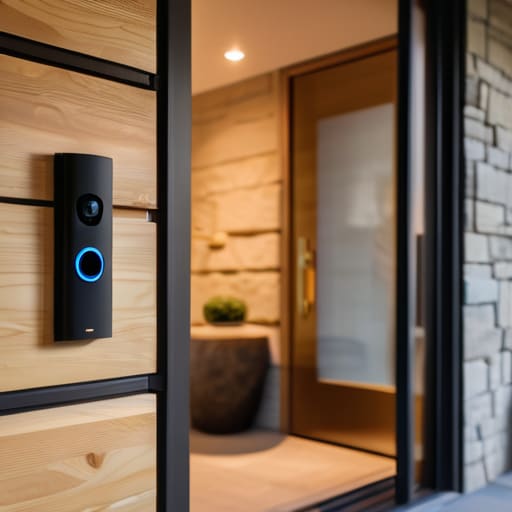
I was sitting in my workshop last weekend, mid-way through stripping the old varnish off a 1958 teak sideboard, when my phone started screaming. It wasn’t a text or a calendar alert; it was my doorbell camera, pinging me because a stray cat had wandered onto my porch. In that moment, I felt less like a homeowner and more like a data point being managed by a series of twitchy sensors. We’ve been sold this dream that smart security is the ultimate key to peace of mind, but more often than not, it just feels like we’ve invited a frantic, digital middleman into our most private spaces.
I’m not here to tell you which flashy gadget has the most megapixels or which subscription model is currently trending on social media. Instead, I want to help you cut through the noise. My goal is to help you navigate the fine line between actual safety and unnecessary surveillance. We are going to look at how to implement tech that serves your life without turning your home into a digital cage, ensuring that your security measures actually grant you freedom rather than just adding more notifications to your day.
Table of Contents
Beyond Automated Home Security Systems Reclaiming Your Privacy
We’ve been sold the idea that more data equals more safety, but there’s a thin line between a watchful eye and a digital voyeur. When we lean too heavily on remote surveillance technology, we often forget who actually holds the keys to that footage. I’ve seen too many people trade their domestic sanctity for the convenience of checking a doorbell camera from their phone, only to realize their most private moments are sitting on a server somewhere. If your peace of mind depends entirely on cloud-based security storage, you aren’t just protecting your house; you’re outsourcing your privacy to a corporation.
True autonomy means knowing exactly where your data lives and who can see it. Instead of opting for a total, all-encompassing ecosystem, I prefer a more intentional approach. I look for ways to implement a wireless security sensor setup that focuses on perimeter protection rather than constant, invasive monitoring of the interior. We need to stop treating our homes like data farms. Real security shouldn’t feel like a constant digital audit; it should be the quiet, reliable barrier that lets you actually relax when the lights go out.
The Noise of Real Time Motion Detection Alerts

There is a specific kind of psychological fatigue that comes from a phone that won’t stop buzzing. We were promised that automated home security systems would provide peace of mind, but more often than not, they just deliver a relentless stream of digital anxiety. I’ve spent many evenings sitting on my sofa, watching my phone light up every time a stray cat wanders across the driveway or a tree branch brushes against a sensor. These real-time motion detection alerts are designed to keep us vigilant, but they often end up keeping us hyper-aroused and distracted.
The problem is that these systems frequently struggle to distinguish between a genuine threat and the mundane rhythms of a neighborhood. When your device treats a delivery driver or a gust of wind with the same urgency as a forced entry, the signal gets lost in the noise. We start to ignore the notifications altogether, which is exactly when the system fails its primary purpose. Instead of feeling protected, I often feel like I’m just managing a second job as a volunteer security guard, constantly checking a screen to see if the “emergency” was actually just a shadow.
Practical Guardrails for a Saner, Safer Home
- Audit your data permissions like you’d audit a new employee. If a smart doorbell is asking for access to your contacts or your entire photo library, deny it. It doesn’t need to know who your college roommate is to tell you if a package arrived on the porch.
- Prioritize local storage over the cloud whenever possible. There is a massive difference between a camera saving footage to a physical SD card in your living room and a company hosting your private life on a server halfway across the world.
- Embrace the “manual override.” Don’t let your security system become so automated that you lose the ability to interact with it directly. If a system requires a constant internet connection just to unlock your front door, you haven’t bought security; you’ve bought a single point of failure.
- Set boundaries for your notifications. If your phone buzzes every time a stray cat wanders past the sensor, you’ll eventually start ignoring the alerts altogether. Fine-tune your sensitivity so that you only hear from your home when it actually matters.
- Keep your hardware on a separate network. If you’re tech-savvy enough to set up a guest Wi-Fi, put all your smart devices on that secondary lane. It keeps your personal laptop and sensitive documents isolated from a potentially vulnerable smart lightbulb or cheap camera.
Striking a Balance Between Safety and Sanity
Prioritize privacy by choosing systems that process data locally rather than sending every frame of your private life to a distant cloud server.
Audit your notification settings ruthlessly to ensure your devices are alerting you to genuine threats, not just the neighbor’s cat or a passing shadow.
Treat smart security as a tool for peace of mind, not a replacement for basic home maintenance and the intuition that tells you when something is actually wrong.
The Illusion of Control
We’ve been sold this idea that more data equals more safety, but there’s a fine line between a home that watches over you and a home that simply reports on you. Real security isn’t found in a constant stream of push notifications; it’s found in the quiet confidence that your private life remains, well, private.
Yvette Marchetti
Finding the Balance

At the end of the day, smart security shouldn’t feel like a second job or a constant source of digital anxiety. We’ve looked at how the relentless stream of motion alerts can erode our peace of mind and how the promise of total surveillance often comes at the steep cost of our personal privacy. It is easy to get swept up in the marketing hype that tells us more data equals more safety, but we have to remember that true security is about stability, not constant monitoring. If your smart home system requires you to check your phone every twenty minutes just to feel “safe,” then the technology isn’t serving you—you are serving it.
As we move forward into an increasingly connected world, my advice is to remain intentionally skeptical. Don’t be afraid to opt for the “dumb” solution if it preserves your autonomy and keeps your home feeling like a sanctuary rather than a data center. We have the power to decide which tools earn a place in our private lives and which ones are just expensive noise. Let’s strive to build lives where technology acts as a quiet, reliable guardian in the background, leaving us free to actually live our lives instead of just managing our devices.
Frequently Asked Questions
How do I balance the convenience of remote monitoring with the risk of my private data being stored on a company's cloud server?
It’s the classic modern trade-off: convenience versus control. If you want the peace of mind that comes with remote access, look for hardware that supports local storage—think SD cards or a dedicated Network Attached Storage (NAS) system. This keeps your footage inside your four walls rather than floating in a corporate cloud. If you must use the cloud, vet the company’s encryption standards and two-factor authentication like your life depends on it. Use the tech, but don’t let it own you.
Is there a way to set up a smart home system that actually alerts me to real threats without becoming a constant source of digital anxiety?
It comes down to intentionality over automation. Stop chasing every “smart” notification and start auditing your alert logic. You need to move past simple motion triggers—which treat a stray cat like a home intruder—and invest in systems that use local AI for person or vehicle detection. Set your boundaries: if it isn’t a person at the door or a breach of a specific perimeter, it doesn’t need to buzz your pocket. Protect your peace first.
What are the practical steps for auditing my current devices to ensure they aren't becoming "digital leashes" that compromise my family's privacy?
Start with a physical inventory. Sit down with my paper planner and list every device that touches your Wi-Fi—from the doorbell to the smart fridge. Check the app permissions: does that lightbulb really need access to your contacts? If a device requires a constant cloud connection just to function, it’s a liability. Disable “always-on” microphones and set your cameras to local storage instead of the cloud. If it can’t work offline, rethink its place in your home.
