
I was halfway through stripping the original veneer off a 1962 teak sideboard last Tuesday when I saw a tech demo claiming that augmented reality applications could “revolutionize” home renovation by overlaying digital furniture onto your living space. I stared at the wood shavings on my floor and felt that familiar, sharp pang of skepticism. We are being sold this idea that we need a digital layer between our eyes and the physical world just to make simple decisions, as if our own intuition and spatial awareness are suddenly obsolete. Most of the hype around these tools feels like it’s designed to solve problems we don’t actually have, adding layers of digital noise to a world that is already loud enough.
I’m not here to tell you that this tech is magic, nor am I here to play the luddite. Instead, I want to look at the actual utility of augmented reality applications through a lens of practicality rather than profit. We’re going to cut through the marketing fluff to figure out which tools actually grant us more creative freedom and which ones are just expensive distractions. My goal is to help you decide if these tools are worth your mental bandwidth or if they’re just another way to lose touch with the tangible world.
Table of Contents
- Real Time Data Visualization Without Losing Our Focus
- Mixed Reality Enterprise Solutions That Empower the Worker
- Five Ways to Keep AR From Becoming Just More Digital Noise
- Cutting Through the Hype: What Actually Matters
- The Human Cost of the Digital Overlay
- The Human Bottom Line
- Frequently Asked Questions
Real Time Data Visualization Without Losing Our Focus

I remember sitting in a high-stakes boardroom during my HR days, watching executives struggle to parse through a dense, fifty-slide deck. The cognitive load was immense, and by slide twenty, everyone’s eyes had glazed over. This is exactly why the promise of real-time data visualization through AR feels so significant, yet so potentially dangerous. On one hand, being able to overlay live metrics onto a physical workspace could revolutionize how we troubleshoot complex machinery or manage logistics. It promises a seamless flow of information that matches the speed of our decision-making.
However, there is a fine line between being informed and being bombarded. As we see more mixed reality enterprise solutions entering the professional sphere, we have to ask: are we actually gaining clarity, or are we just decorating our field of vision with more digital noise? If a heads-up display is constantly flashing red alerts or scrolling tickers, it isn’t helping us focus; it’s fracturing our attention. We need tools that act as a quiet whisper in our ear, providing the right data at the exact moment it’s needed, rather than a relentless digital scream.
Mixed Reality Enterprise Solutions That Empower the Worker

When we talk about mixed reality enterprise solutions, the conversation often drifts toward sci-fi fantasies of workers floating in digital clouds. But in my years in HR, I learned that the most effective tools are the ones that actually remove friction, not add to it. In a warehouse or a high-tech manufacturing plant, we aren’t looking for a digital playground; we’re looking for clarity. The goal of integrating heads-up display technology into a professional workflow should be to keep a technician’s hands free and their eyes on the task at hand, rather than forcing them to toggle between a physical manual and a flickering screen.
If these tools are designed well, they create truly immersive user experiences that respect the worker’s expertise. It’s about providing a layer of intelligence that supports human intuition. When a specialist can see a schematic overlaid directly onto a piece of complex machinery, they aren’t being replaced by an algorithm—they are being empowered by precision. We have to ensure this tech serves to sharpen our existing skills, rather than turning us into mere appendages of a digital interface.
Five Ways to Keep AR From Becoming Just More Digital Noise
- Prioritize utility over novelty. Before you integrate an AR tool into your workflow, ask yourself: does this actually solve a friction point, or are we just adding a layer of visual clutter for the sake of being “cutting edge”?
- Guard your cognitive load. The biggest risk with augmented reality is sensory overload. If an application is constantly flashing notifications into your field of vision, it isn’t empowering you—it’s hijacking your attention.
- Demand seamless integration. Technology should feel like an extension of our natural capabilities, not a clunky obstacle. If an AR interface requires more mental effort to navigate than the task it’s supposed to assist, it’s a failed tool.
- Maintain a “human-in-the-loop” philosophy. We should use AR to augment our expertise, not to replace our judgment. Never let a digital overlay convince you to stop thinking critically about the physical world right in front of you.
- Respect the boundaries of presence. There is a profound difference between being “connected” and being “present.” Use AR to enhance your interaction with your environment, not as a digital veil that separates you from the people and spaces around you.
Cutting Through the Hype: What Actually Matters
We need to stop asking what augmented reality can do and start asking what it should do; if a tool doesn’t actively reduce cognitive load or solve a tangible problem, it’s just digital clutter.
True empowerment in the workplace comes from technology that supports human intuition rather than trying to automate it out of existence.
The success of any AR implementation shouldn’t be measured by how “futuristic” it looks, but by whether it gives workers more agency and more time to focus on the work that actually requires a human touch.
The Human Cost of the Digital Overlay
“We have to stop asking how much data we can cram into our field of vision and start asking how much of our actual, physical reality we’re willing to sacrifice just to see a digital layer on top of it.”
Yvette Marchetti
The Human Bottom Line
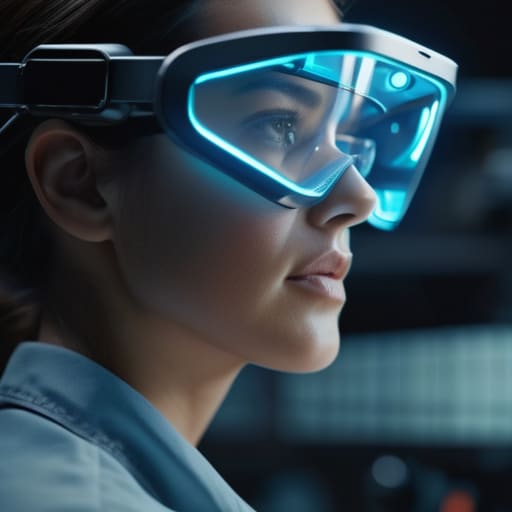
At the end of the day, we’ve looked at how augmented reality can overlay data onto our physical world and how mixed reality can theoretically empower a technician on a factory floor. These aren’t just technical milestones; they are shifts in how we perceive our environment. However, we have to be careful not to mistake increased information density for actual productivity. If an AR headset just adds more layers of digital noise to an already overwhelming workday, we haven’t innovated—we’ve just cluttered our vision. The goal of these applications shouldn’t be to replace our intuition with a HUD, but to provide the clarity we need to do our best work without the constant mental friction of switching between screens and reality.
As we move forward into this increasingly blended landscape, my advice is to remain the architect of your own attention. Technology should serve as a bridge to better understanding, not a barrier between us and the task at hand. Let’s push for tools that respect our cognitive limits and honor our need for presence. Real progress isn’t found in how much digital data we can cram into our field of vision, but in how much meaningful freedom those tools grant us to focus on what truly matters. Don’t let the spectacle of the tech overshadow the purpose of the work itself.
Frequently Asked Questions
How do we prevent these AR overlays from becoming just another layer of digital clutter that actually increases our cognitive load?
We have to stop treating every new feature like it’s a gift. If an AR overlay doesn’t solve a specific, immediate problem, it’s just digital noise. To prevent cognitive overload, we need “contextual minimalism”—software that stays invisible until the exact moment it’s needed. We shouldn’t be swimming in data; we should be supported by it. If the tech requires more mental effort to manage than the task itself, it’s failed.
Is there a point where constant augmented reality starts eroding our ability to engage with the physical world around us?
There is absolutely a tipping point. When we start viewing the world through a digital overlay, we stop experiencing reality and start consuming a curated version of it. If every glance at a street corner is met with a data pop-up or a notification, we lose the ability to simply be present. We risk becoming spectators in our own lives, trading the richness of unmediated experience for the convenience of a digital shortcut.
For those of us worried about privacy, how much of our personal space and data is actually being harvested by these headsets?
Let’s be blunt: the privacy implications are significant. These headsets aren’t just looking at your eyes; they’re mapping your living room, tracking your gait, and recording how you react to stimuli. It’s a goldmine of biometric data. While companies promise “privacy-first” frameworks, we have to remember that data is the new oil. We shouldn’t just accept the trade-off of our personal sanctuary for a digital overlay without demanding much stricter, transparent guardrails.
