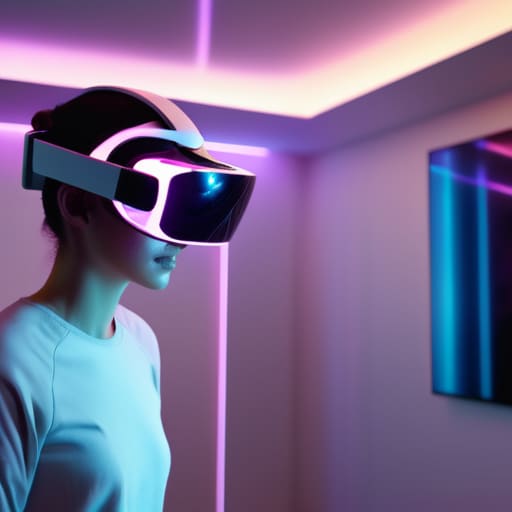
I spent my Tuesday morning elbow-deep in lemon oil, trying to breathe life back into a 1962 teak sideboard, when a notification popped up on my phone about a high-stakes keynote on the metaverse. It felt so jarring—this sudden, loud demand to care about a digital dimension while I was literally touching something real. We are being told, with a terrifying amount of confidence, that our future social and professional lives are about to migrate into a simulated void. But honestly? Most of the talk I hear sounds less like a revolution and more like a desperate attempt to sell us more hardware to distract us from the fact that our physical world is feeling increasingly fractured.
I’m not here to tell you which headset to buy or to recite a Silicon Valley pitch deck. Instead, I want to look at this through a lens of actual human utility. Over the next few sections, I’m going to strip away the neon marketing and examine what this technology actually offers our sense of agency and connection. My promise to you is simple: no hype, no jargon, just a pragmatic look at whether these virtual spaces will actually expand our horizons or just become another way to keep us staring at screens.
Table of Contents
Spatial Computing Trends and the Erosion of Presence
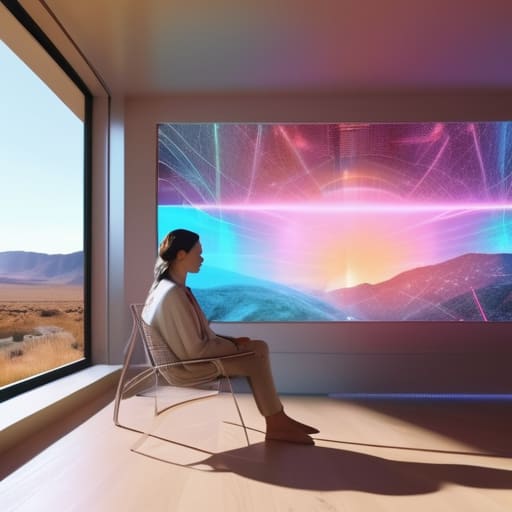
We’re seeing a massive push toward spatial computing trends that promise to blend our physical surroundings with digital layers. On paper, the idea of seamless augmented reality integration sounds like a productivity dream—imagine walking through a grocery store with digital lists floating near the aisles, or attending a meeting where your colleague’s hologram sits in the chair next to you. But there’s a quiet cost to this constant overlay. When every inch of our visual field is potentially monetized or cluttered with data, we lose the ability to simply be in a space.
The real danger lies in how these technologies erode our sense of presence. If we are constantly adjusting our avatar customization technology to fit a digital persona, we start to drift away from our physical selves. We risk becoming spectators in our own lives, eyes darting between the real world and a curated stream of information. I worry that instead of enhancing our reality, we are just building a high-tech way to ignore the world right in front of us. We need to decide if we want to inhabit our lives, or just navigate a digital skin draped over them.
Augmented Reality Integration Enhancing Life or Masking Reality

We’re being sold a vision of augmented reality integration that promises to overlay convenience onto our physical world, like seeing walking directions projected onto the sidewalk or recipe steps floating above your stove. On paper, it sounds like the ultimate productivity hack. But as someone who spent years watching corporate “efficiency tools” actually just increase burnout, I can’t help but wonder where the line is. Are we actually enhancing our environment, or are we just layering a permanent, flickering digital shroud over the world we actually inhabit?
There is a subtle danger in the push for seamlessness. When we lean too heavily on these overlays, we risk losing our unfiltered connection to our surroundings. If every glance is mediated by a lens that prioritizes data points and notifications, we stop truly seeing the world and start merely scanning it. We might find ourselves more “connected” to a stream of information than to the person sitting across the table from us. We have to decide if we want technology to act as a window that opens our eyes, or a filter that numbs our senses.
How to Keep Your Foot on the Ground While Your Head is in the Cloud
- Set hard boundaries for “analog hours.” Decide now—before the headsets become ubiquitous—that certain parts of your day, like dinner or your morning coffee, are strictly offline zones. Don’t let a virtual overlay dictate when you’re allowed to be present with the people sitting right in front of you.
- Audit the “utility vs. noise” ratio of every new platform. Before you commit your time or data to a new virtual space, ask yourself: Does this actually solve a problem or expand my capabilities, or am I just paying for a more expensive way to be distracted?
- Guard your sensory autonomy. As augmented reality begins to layer data over our physical world, we run the risk of letting algorithms decide what we see and how we perceive our surroundings. Be intentional about when you want a filtered reality and when you need the unvarnished, sometimes messy, truth of the physical world.
- Prioritize “high-friction” real-world activities. There is a specific kind of human stability that comes from tactile, physical experiences—like my weekend spent sanding down an old teak sideboard. Don’t let the seamlessness of the metaverse trick you into thinking that digital achievement is a substitute for physical mastery.
- Maintain a healthy skepticism of “presence.” Just because a digital avatar can mimic eye contact doesn’t mean you’re actually connecting. Learn to distinguish between the dopamine hit of a simulated social interaction and the deep, restorative nourishment of real-world human proximity.
The Human Bottom Line

We have to stop treating “presence” as a metric to be optimized by software and start protecting the unmediated, physical moments that actually ground us.
Technology should serve as a tool to extend our capabilities, not a layer of digital noise that obscures the world we actually inhabit.
Before we fully commit to these virtual landscapes, we need to ask if we are gaining new ways to connect or simply losing our ability to be truly present with one another.
The Cost of Digital Immersion
“We’re being sold the promise of infinite connection, but I can’t help but wonder if we’re actually just trading the messy, beautiful depth of physical presence for a polished, programmable imitation that leaves us lonelier than when we started.”
Yvette Marchetti
The Human Bottom Line
At the end of the day, we have to stop treating the metaverse as an inevitable destiny and start treating it as a choice. We’ve looked at how spatial computing threatens our sense of presence and how augmented reality risks becoming a digital veneer over a crumbling physical world. If we aren’t careful, we are simply trading one set of distractions for a more immersive, more expensive set of illusions. We cannot allow the promise of “limitless connection” to become a convenient excuse for losing our grip on the tangible world right in front of us. Technology should serve as a tool to bridge gaps, not a permanent substitute for the messy, unoptimized beauty of being physically present.
My hope isn’t that we reject these tools entirely—I’m a tech journalist, after all—but that we approach them with a healthy dose of skepticism. As we stand on the precipice of this new digital frontier, let’s make sure we are building bridges rather than cages. Real progress isn’t found in how many hours we can spend inside a headset; it’s found in how much meaningful freedom these tools can grant us in our actual lives. Let’s choose to use the digital to enhance the human, ensuring that no matter how advanced our virtual worlds become, we never lose the essential need to look up, step outside, and truly connect.
Frequently Asked Questions
If we move our professional lives into these virtual spaces, how do we prevent the "always-on" burnout from becoming even more inescapable than it already is?
We have to draw hard, physical lines. If our workspace is no longer a desk in a room, but a digital layer over our living rooms, the “office” never actually leaves us. To survive this, we need intentional friction: scheduled digital blackouts and strict “presence” boundaries. We can’t let seamless integration become a euphemism for constant availability. If we don’t design the exit ramps now, we’re just building a more immersive treadmill.
Who actually owns our digital identity and our data once we’ve spent years building a life inside a proprietary metaverse?
The short answer? Nobody but the corporations. We like to think of our digital avatars and curated histories as extensions of ourselves, but in a proprietary metaverse, you’re essentially a tenant in a house you can’t own. If the platform decides to change its terms—or simply goes under—your digital identity doesn’t just migrate; it evaporates. We’re trading our autonomy for convenience, building entire lives on rented land that can be reclaimed at any moment.
Can a simulated environment ever truly replicate the nuance of human connection, or are we just trading deep intimacy for high-resolution convenience?
The short answer? No. We can simulate the visual fidelity of a person, but we can’t simulate the weight of their presence. Connection isn’t just high-res textures or low-latency audio; it’s the unscripted, messy, physical reality of being in the same room. When we swap physical closeness for digital convenience, we’re trading the profound, sometimes uncomfortable depth of human intimacy for a polished, frictionless imitation. It’s efficient, sure, but it’s hollow.
