
I was sitting at my dining table last week, sanding down a stubborn layer of lacquer on a 1955 teak sideboard, when I realized how much my daughter’s school experience reminds me of a poorly restored piece of furniture. They keep layering on these expensive, shiny new apps and interactive whiteboards, hoping the gloss will hide the fact that the foundation is shaky. We’ve been sold this idea that more screens automatically equal better learning, but frankly, the current obsession with tech in education often feels like we’re just adding more digital noise to a room that’s already too loud. It’s not about how many tablets you can hand out; it’s about whether those tools actually help a student think, or if they just provide a high-tech distraction.
I’m not here to tell you that we should banish computers to the basement, but I am here to cut through the marketing fluff. In this series, I want to look past the shiny demos and talk about what actually works when the classroom lights go down. I’ll be sharing my honest, no-nonsense take on how we can use these tools to foster genuine curiosity without losing the human connection that makes learning stick.
Table of Contents
- Finding Purpose Amidst Rapid Digital Transformation in Schools
- Prioritizing Student Engagement Through Technology Over Mere Noise
- Five ways to keep the "human" in the digital classroom
- Cutting Through the Digital Noise
- The Human Element in the Digital Classroom
- Finding the Balance
- Frequently Asked Questions
Finding Purpose Amidst Rapid Digital Transformation in Schools

I’ve spent a lot of time consulting for companies undergoing massive shifts, and I see the same pattern playing out in our classrooms. There is this frantic rush to adopt every new piece of personalized learning software that hits the market, often under the guise of “innovation.” But we have to ask: are these tools actually helping a child discover their interests, or are they just turning them into passive consumers of an algorithm? When we talk about digital transformation in schools, we shouldn’t just be measuring how many devices are in a student’s hands; we should be measuring how much autonomy those devices actually provide.
The real goal isn’t to replace the teacher with a screen, but to use blended learning models to create space for actual human mentorship. I’ve seen how the right mix of digital and tactile learning can spark curiosity, but only when the technology stays in the background. If we let the tools dictate the curriculum, we lose the very thing that makes education meaningful: the messy, unscripted connection between a mentor and a student. We need to ensure that progress doesn’t come at the expense of presence.
Prioritizing Student Engagement Through Technology Over Mere Noise

We’ve all seen it: a classroom full of kids staring at glowing rectangles, but nobody is actually learning. There is a massive difference between a student being occupied by a screen and a student being truly engaged. Too often, the push for digital transformation in schools gets confused with simply upgrading the hardware. We see schools investing heavily in the latest e-learning infrastructure, only to find that the devices have become nothing more than high-tech distractions. If the tool doesn’t spark curiosity or require critical thinking, it’s just expensive noise.
The real win happens when we move toward blended learning models that use digital tools to bridge gaps, not fill them. I’ve noticed that the most effective approaches use personalized learning software to meet a student where they are, allowing them to master a concept at their own pace before moving on. It shouldn’t be about how many apps are running in a classroom; it should be about how those tools facilitate deeper human connection and understanding. We need to stop measuring progress by the number of tablets in a room and start looking at whether the technology is actually opening doors or just building walls.
Five ways to keep the "human" in the digital classroom
- Stop treating tech like a magic wand. A new app won’t fix a broken curriculum or a lack of engagement; it’s just a tool, and like any tool, it’s only as good as the person wielding it.
- Prioritize deep focus over constant connectivity. We’re seeing more digital distraction than actual learning, so we need to build in “analog windows” where students can actually think without a notification pinging every thirty seconds.
- Use technology to bridge gaps, not widen them. If a new software requires a high-speed connection and the latest hardware that half your students can’t afford, you aren’t innovating—you’re just creating a new tier of inequality.
- Teach digital literacy, not just digital fluency. Knowing how to swipe through a tablet is easy; knowing how to critically evaluate a source or understand an algorithm is the real skill they’ll need to survive the real world.
- Keep the teacher at the center. No AI-driven platform can replace the nuance of a mentor who knows when a student is struggling emotionally or when a breakthrough is just about to happen. Technology should support the educator, not try to act as one.
Cutting Through the Digital Noise
Technology should be treated as a tool for empowerment, not a substitute for teaching; if a gadget doesn’t actively deepen a student’s understanding or spark genuine curiosity, it’s just expensive distraction.
We have to stop measuring educational “progress” by how many screens are in a classroom and start looking at whether those tools are actually giving students the agency to think critically.
The goal isn’t to automate the classroom, but to use digital resources to clear away the busywork so that the human connection between teacher and student can actually breathe.
The Human Element in the Digital Classroom
“We have to stop treating high-tech gadgets as a substitute for actual teaching; a tablet can deliver a lesson, but it can’t mentor a student, and it certainly can’t replace the spark that happens when a person actually feels understood.”
Yvette Marchetti
Finding the Balance
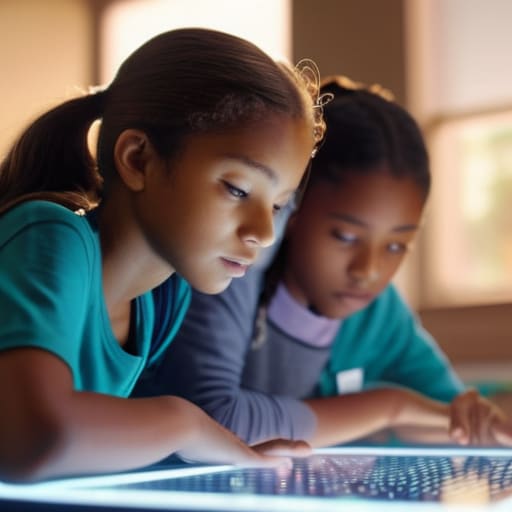
At the end of the day, integrating technology into the classroom isn’t about chasing the latest shiny gadget or checking a box for “innovation.” It’s about ensuring that every piece of software and every digital interface actually serves a pedagogical purpose. We’ve seen that when we prioritize engagement over mere digital noise, and when we focus on finding purpose within the transformation, we create a space where students don’t just consume content—they master it. We have to remain vigilant, ensuring that these tools act as scaffolding for growth rather than a replacement for the critical thinking and human connection that define true learning.
As I sit at my desk, looking at my paper planner and thinking about how much our world has shifted, I’m reminded that progress shouldn’t feel like a race we’re losing. The goal of educational tech shouldn’t be to automate the classroom, but to liberate both teachers and students from the mundane, giving them more room to be human. Let’s stop asking how much tech we can fit into a school day and start asking how much more meaningful our schools can become because of it. Real progress is measured by the depth of understanding we foster, not the speed of our processors.
Frequently Asked Questions
How do we keep teachers from feeling like they're being replaced by software instead of being supported by it?
We need to stop treating software like a replacement for a teacher’s intuition and start treating it like a high-end power tool. The goal shouldn’t be to automate the classroom, but to automate the administrative sludge—the grading, the data entry, the endless paperwork—that keeps teachers from actually connecting with their students. If a tool doesn’t give a teacher more time to actually teach, it isn’t progress; it’s just more noise.
At what point does "digital integration" just become a way to justify cutting budgets for actual human interaction?
It becomes a justification the moment the software is treated as a substitute rather than a supplement. When a school district trades a teaching assistant for a subscription to an AI-driven learning platform to “balance the books,” that’s not innovation—it’s an austerity measure disguised as progress. We have to be careful. If the technology is being used to bridge a gap, it’s a tool. If it’s being used to fill a void left by human staff, it’s a cost-cutting tactic.
How can we ensure these tools don't just widen the gap between kids who have high-speed access at home and those who don't?
This is the part that keeps me up at night. We talk about “innovation” like it’s a rising tide that lifts all boats, but in reality, it often just widens the canyon. If a classroom relies on high-bandwidth tools that require seamless home connectivity, we aren’t educating; we’re gatekeeping. We have to prioritize offline-first designs and school-provided hardware. Progress shouldn’t be a luxury reserved for the kids with fiber-optic lines in their living rooms.
